We provide Construction Workers Registration service, and introduce Registered Specialist Trade Contractors Scheme as well as the Technically Competent Persons Registration Scheme to the construction industry.
We provide Construction Workers Registration service, and introduce Registered Specialist Trade Contractors Scheme as well as the Technically Competent Persons Registration Scheme to the construction industry.
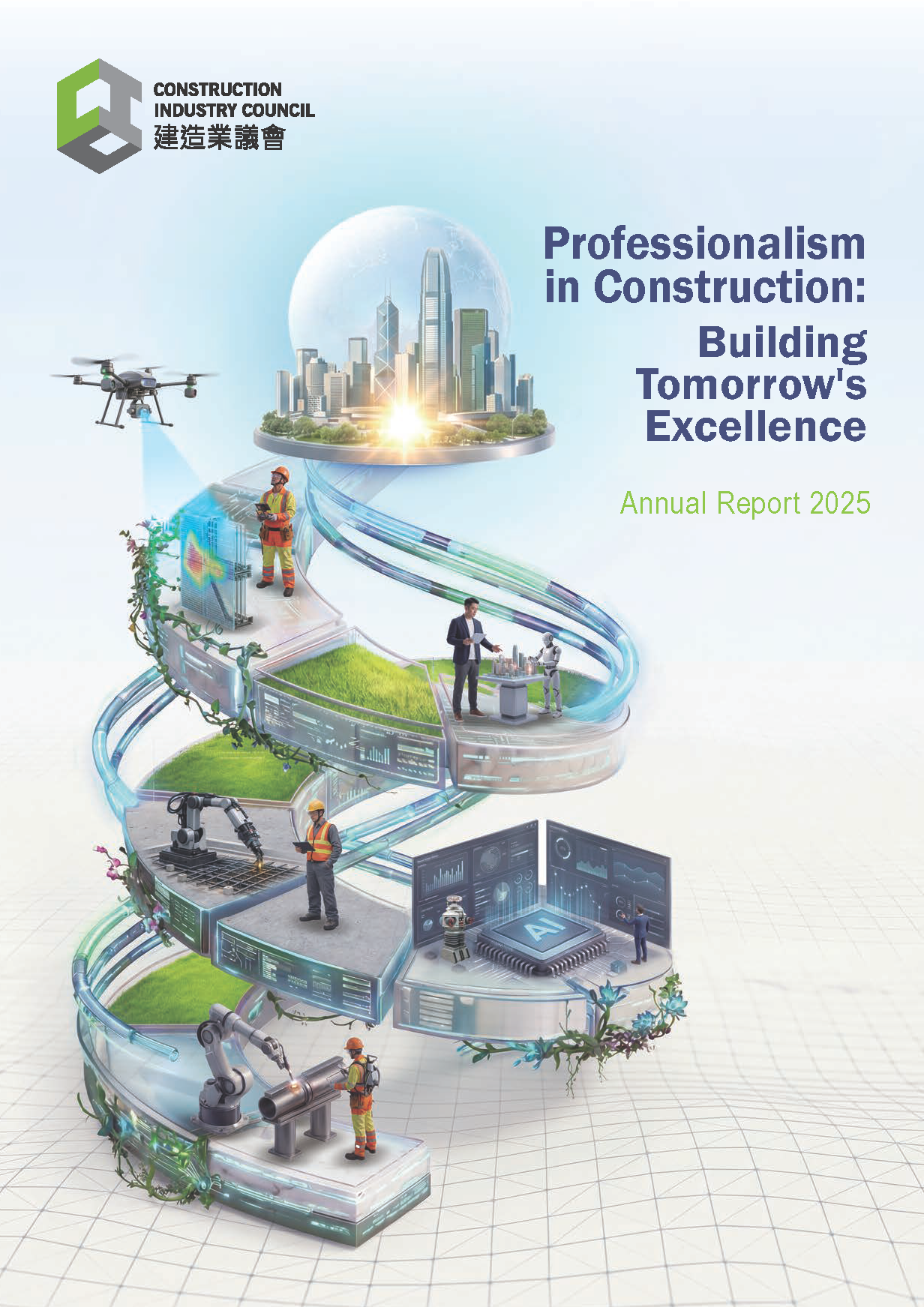
Innovative technologies have become a key pillar of the construction industry. From robotics and the Smart Site Safety System (4S) to Building Information Modelling (BIM) and artificial intelligence (AI), these advancements not only demonstrate the industry’s rapid development, but also reflect its shared commitment to delivering projects more efficiently and safely.
Currently, more than 150 public and private construction projects in Hong Kong adopt the Modular Integrated Construction (MiC), alongside over 80 implementing Multi-trade Integrated Mechanical, Electrical and Plumbing (MiMEP). Spanning sectors such as housing, healthcare, education and infrastructure, these approaches enhance safety for frontline workers by reducing high-risk, work-at-height activities, while reinforcing Hong Kong's position as a global hub for construction innovation.
The Construction Industry Council (CIC) has designated 2026 as the “Year of AI”, and hosted the CIC Global AI and Smart Construction Conference and Exhibition in June, bringing together industry leaders to explore how AI, robotics and emerging technologies are shaping the future of the construction industry.
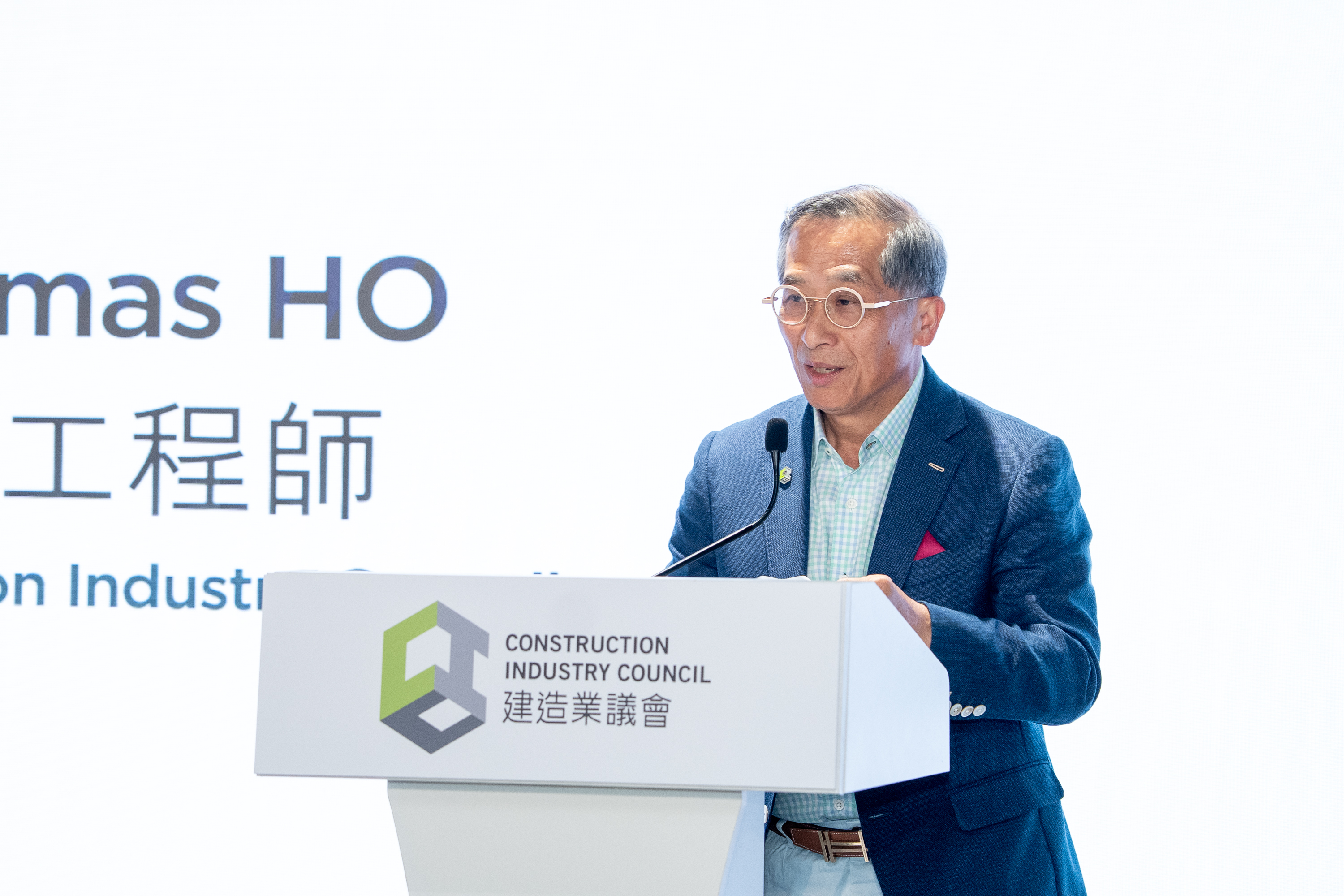
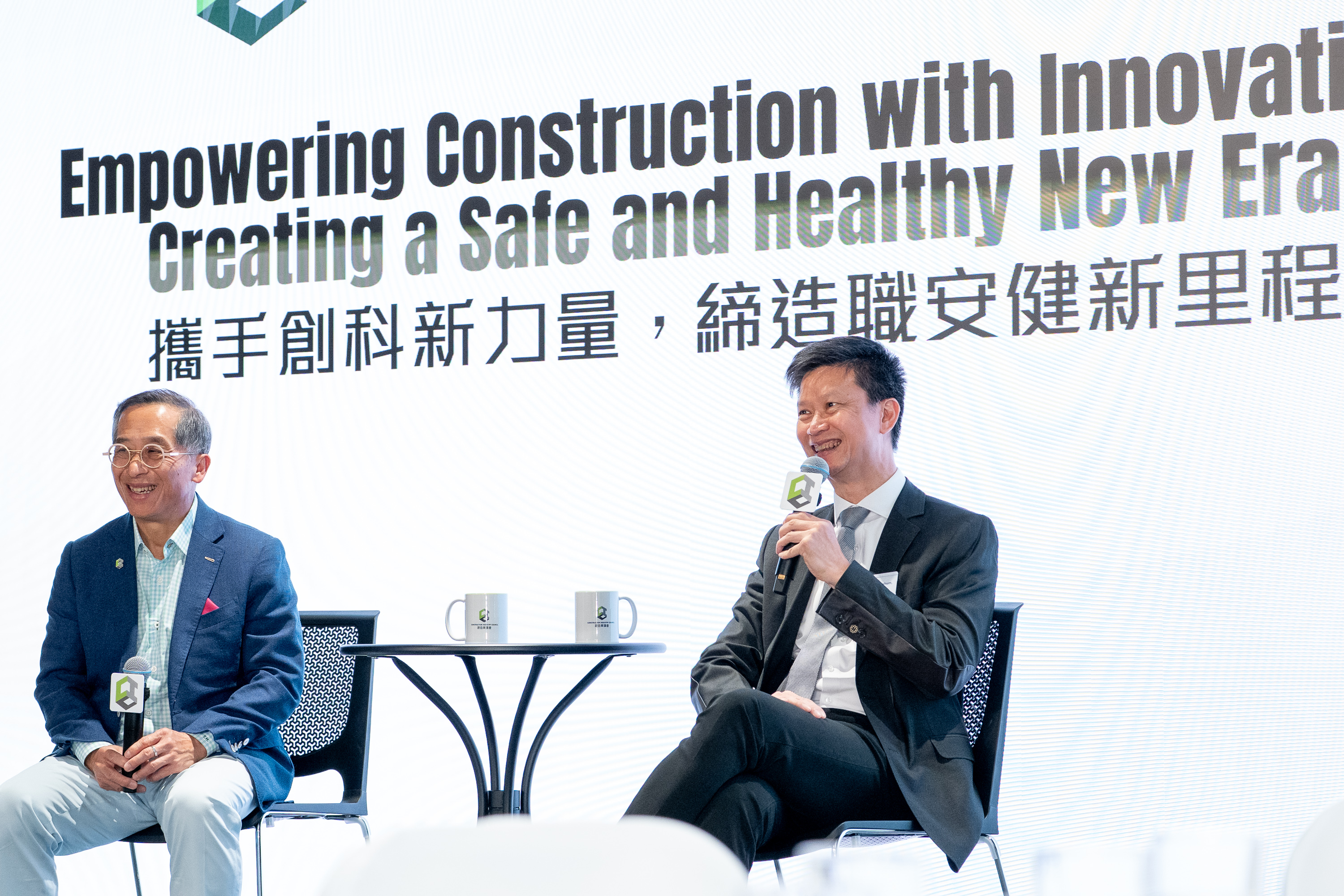
At a recent “CIC – See What I See” event, Ir Prof. Thomas HO, Chairman of the CIC, stated, "We believe that AI is both a catalyst and a cornerstone of innovation. As we embrace innovation, we must also safeguard the safety and dignity of every member of the workforce." Just as a building relies on a solid base to define its resilience and longevity, safety is the invisible yet indispensable foundation for people.
Foundation of Occupational Safety and Health: The Spirit of Craftsmanship The Secretary for Development has encouraged the industry to continuously improve safety measures by invoking the virtues of “wisdom, benevolence and courage”. The CIC advocates “Smart and Care, Safety Beyond Compare”, emphasising that every individual should perform their own duties, and safety is everyone’s responsibility.
The CIC spares no effort in driving the implementation of measures such as 4S, Design for Safety, and the Frontline Personnel Safety Performance Recording Scheme throughout the construction cycle, and continuously reinforces the industry’s core value of the spirit of craftsmanship. To date, 26 industry representatives have signed the Craftsmanship Charter, pledging to uphold the four dimensions – Craftsmanship, Craftsman-soul, Craftsman-skills, and Craftsman-action across every construction site and at every level. Through a commitment to excellence and responsibility, they strive to deliver safe, high-quality construction projects and drive the industry forward.
A New Era of Smart Construction As the head of the regulatory authority for occupational safety and health (OSH) in Hong Kong, Mr. Sam HUI, Commissioner for Labour, pointed out that the department proactively embraces change to address the challenges brought about by rapid technological development. He explained how the Labour Department uses innovative technologies to enhance the effectiveness of inspections, law enforcement, accident investigations and risk monitoring, thereby preventing accidents before they occur.
Mr. HUI noted, "Hong Kong's construction industry is entering a new era of smart construction. The application of smart robotics and systems is becoming increasingly common across construction sites, including remote-control tower crane systems, drone inspections and IoT enabled real time monitoring platforms. Far beyond simple upgrades, these technologies offer safer alternatives to high-risk traditional construction processes. By utilising these tools, our industry can achieve two key objectives: eliminating hazards for workers and enhancing site assessment and monitoring capabilities."
However, innovative technologies require a robust regulatory framework in order to be transformed into tools that deliver tangible safety benefits. To this end, Mr. HUI stated that the Labour Department is working closely with the Development Bureau (DEVB) and other government departments to promote occupational safety and health technologies. He added that the Department inspects construction sites participating in the Smart Site Safety System Labelling Scheme to monitor their implementation and use of the system. If any non-compliance is identified, the DEVB will be notified through the existing mechanism for immediate follow-up.
The Labour Department also leverages technology to improve law enforcement efficiency. For instance, small unmanned aircraft (SUA) equipped with high resolution cameras with super zoom capabilities has been deployed to collect evidence in dangerous and inaccessible locations such as collapsed structures or overturned tower cranes. The SUAs provide a comprehensive aerial view of construction sites and generate 3D reality models which digitally reconstruct accident scenes with a level of detail that was previously impossible, ensuring that investigations are conducted more safely, accurately and efficiently.
In the past, inspecting tower crane components was difficult and dangerous. Today, drones can be used for aerial photography and videography to inspect the high‑up positions of tower cranes. Specifically, they capture signs of wear and tear of wire ropes, corrosion, and cracks at the crane masts, etc. that are often hard to detect from the ground. This also highlights the importance of using effective tools to enhance construction safety.
Indeed, drones have certain limitations, such as being unable to operate in some confined spaces, indoor environments or restricted flying zones. In these situations, handheld 3D LiDAR scanners can be used to accurately record spatial data in complex environments and quickly produce detailed 3D models to aid accident investigation. The Labour Department continuously explores the application of innovative technologies, including small, unmanned detection vehicles, to assist in inspecting high-risk drainage works and investigating related accidents.
The Labour Department also provides professional advice on occupational safety and health compliance during the development of new technologies within the industry. Examples include the installation of AI-enabled tactile devices for truck tail lift operations, the use of remote-controlled tower crane systems, and the application of scaffolding stability monitoring systems, thereby improving construction safety from the outset.
The Labour Department further incorporates innovative technologies into its Codes of Practice and Guidance Notes. For example, starting from November 2024, proprietors or contractors shall install video cameras at the entrances and exits of the confined spaces and record video throughout the entire work period to monitor the compliance with safety precautions, and, with effect from February this year, the responsible person of mobile elevating work platforms (MEWP) should, so far as is reasonably practicable, install effective and suitable secondary guarding devices on the MEWP, such as sensing devices or proximity sensing devices to reduce the risk of workers being trapped by an overhead or adjacent structure or obstacle.
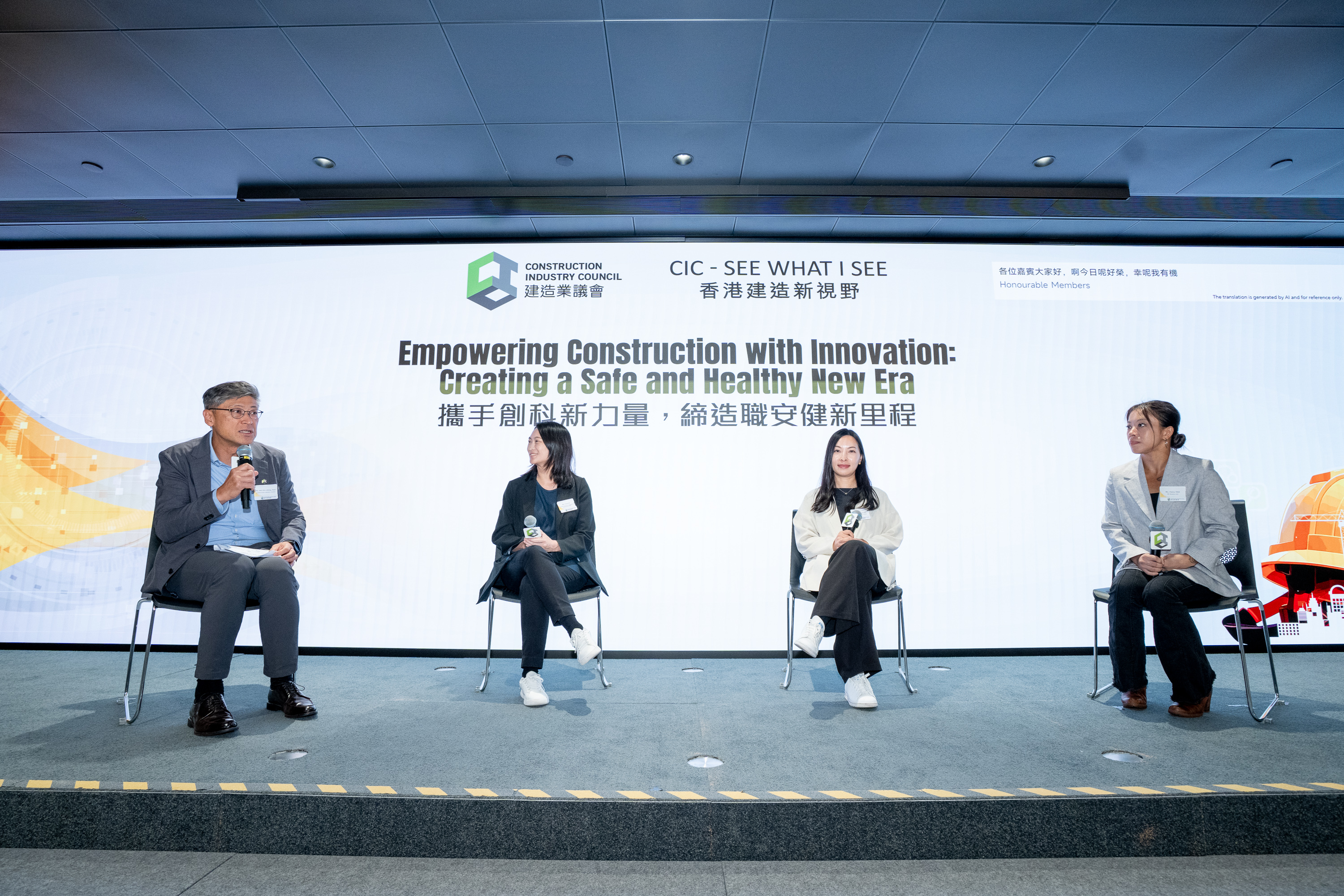
Building a Safety Culture on Construction Sites In addition, the CIC invited industry leaders including Ms. Fiona IP, Senior Manager of Chevalier (Aluminum Engineering) Hong Kong Limited; Ms. Moby LEUNG, Senior Safety Manager of Swire Properties Limited; and Ms. Daisy PAK, Director of HK Bamboo Art, to discuss how innovative technology, effective communication and the craftsmanship spirit can enhance construction site safety.
According to Moby, technology can improve construction speed and accuracy, as well as effectively reduce the risk of accidents. Fiona pointed out that using BIM to simulate the effect of glass curtain walls in advance helps to anticipate potential risks, and that testing robots can be used during installation to assist in handling high-risk procedures, thereby protecting workers. Regarding communication with frontline workers, Daisy stated, “Management staff needs to visit the construction sites and communicate directly with frontline staff to understand the difficulties of on-site operations, allowing workers to feel the management's emphasis on safety. At the same time, they should understand the actual risks from workers' perspective.” Moby agreed about the importance of two-way communication and pointed out that management should make good use of resources and continuously optimise safety systems.
Regarding the integration of the spirit of craftsmanship and safety culture, Fiona believes that craftsmanship is embodied in a professional attitude and should be incorporated into safety considerations comprehensively from the design stage onwards. Daisy, meanwhile, emphasised that everyone should regard safety as an integral part of the process. Take scaffolding as an example: once workers have erected the scaffolding, they ensure that colleagues carrying out the next stage of work can do so safely, thereby demonstrating respect for the work and a spirit of professionalism.
Wrapping up the session, Moby urged the industry not to turn a blind eye to hazards, while Fiona stressed that “safety begins with design, and professionalism is achieved through attention to detail.” Daisy concluded that craftsmanship is a form of self-discipline that comes from within. If every craftsman considers safety as an indispensable part of their profession, construction sites will naturally become safer.
In the field of occupational safety and health, the adoption of innovative technologies is no longer an option, but a cornerstone to the future development of the construction industry. Mr. Sam HUI stated, “Technology enables us to shift from reactive to proactive risk prevention, thereby ensuring that workers return home safely every day. We will work together to build a smarter, safer and more sustainable culture for Hong Kong."