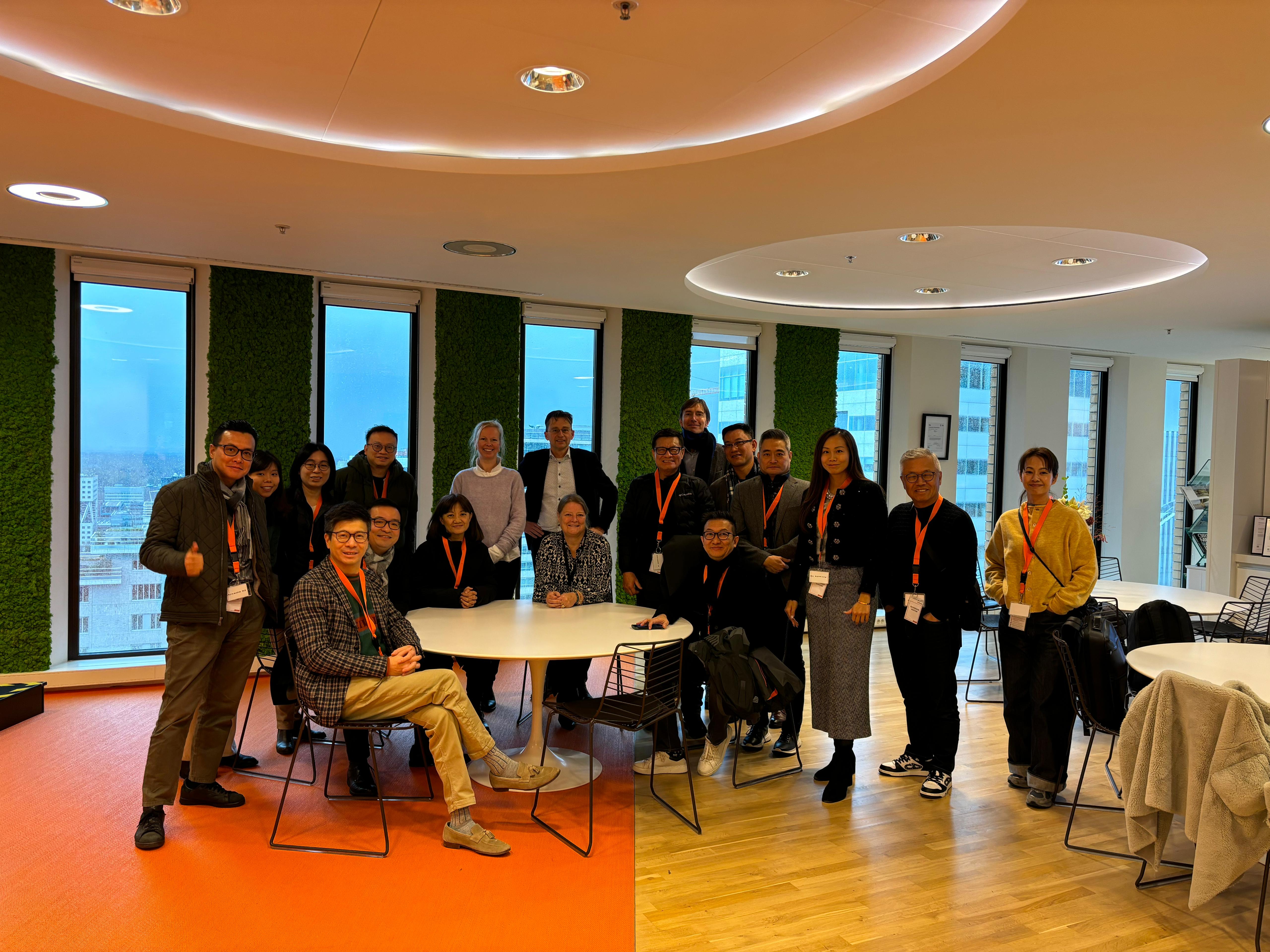
The Netherlands is a global leader in urban development, with a focus on sustainability and innovation. In the study tour, the group explored the country’s transformative city planning strategies, particularly its expertise in land reclamation and mixed-use development.
Zuidas-Zuidasdok Development in Amsterdam
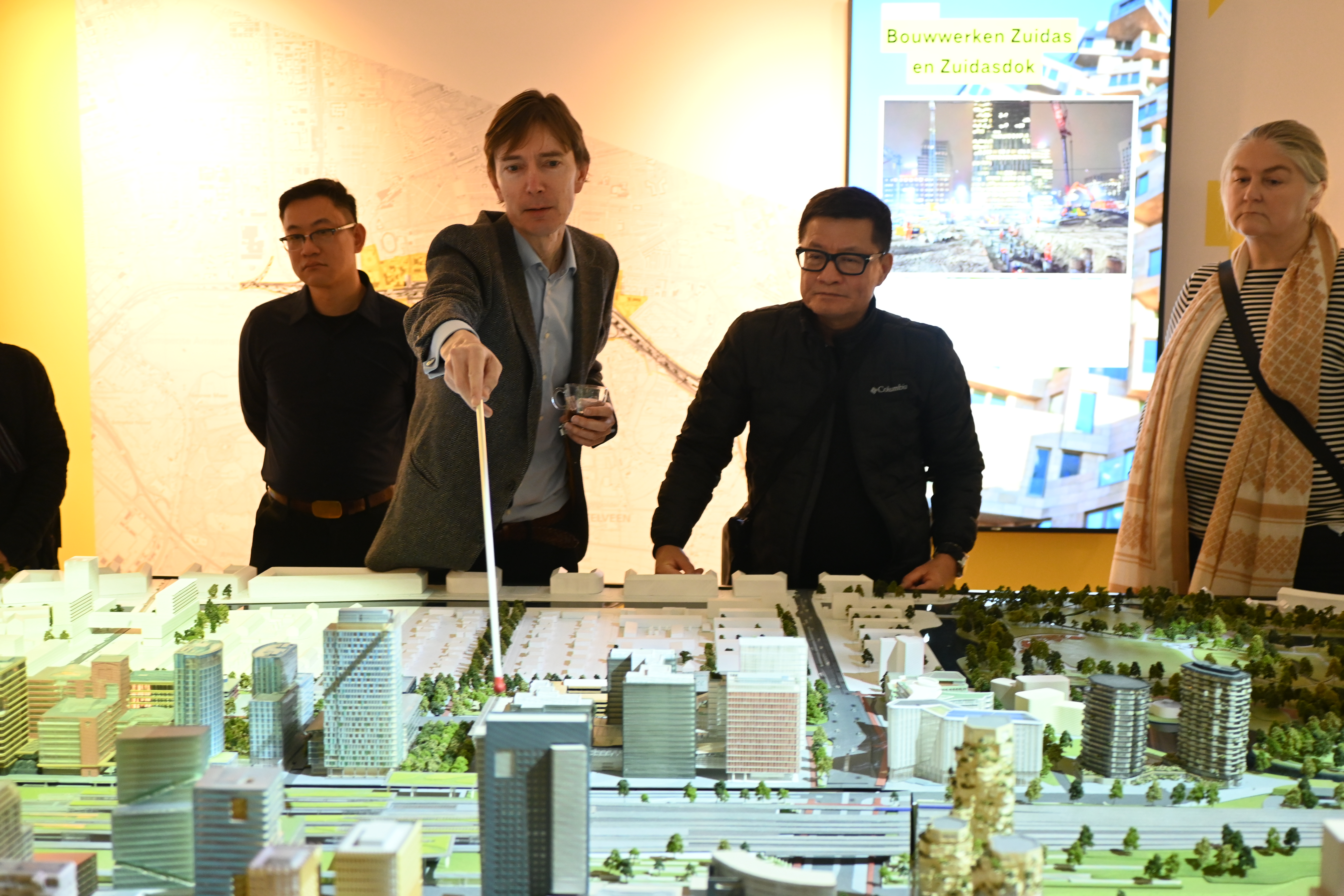
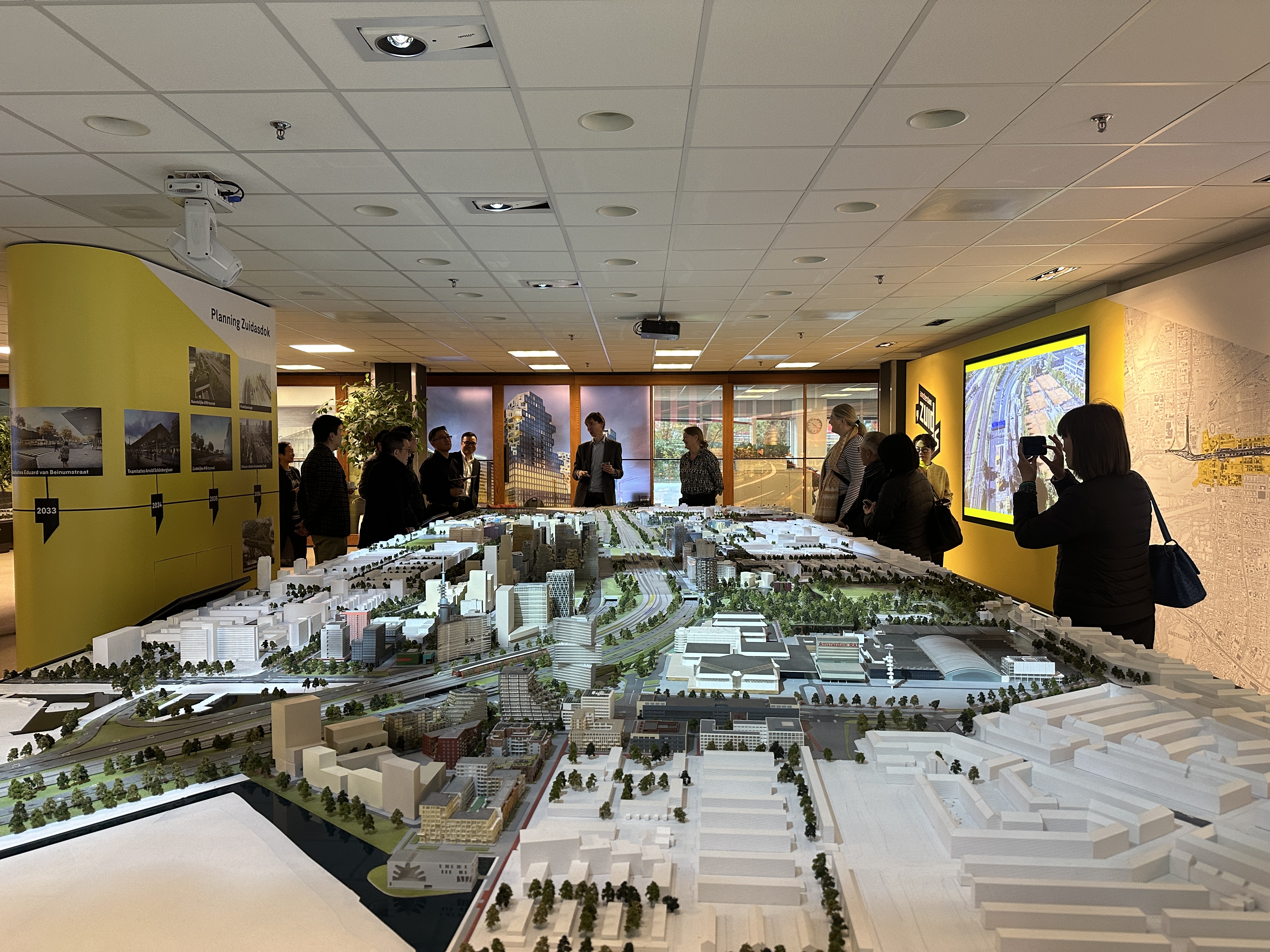
The day began at Zuidas, a 245-hectare area in Amsterdam undergoing a significant transformation. Once dominated by office towers, including the headquarters of ING Bank and ABN Amro, Zuidas is evolving into a mixed-use district that balances commercial, residential, and recreational spaces. Key projects include the regeneration of Amsterdam Zuid station, which will serve as a central hub for trains, metros, trams, buses, and bicycles. Additionally, plans to widen the A10 Zuid and create a tunnel aim to enhance traffic flow and improve the urban environment.
Arcadis HQ: Land Reclamation Expertise
Arcadis shared insights into the Netherlands’ land reclamation techniques. From historical methods using windmills and pumps to modern infrastructure involving dikes and landfills, the country’s expertise is crucial given that a significant portion of its land lies below sea level.
Circular Construction in Zuidas
Arcadis also shared their city’s commitment to circular construction. They are developing the Cube House in Zuidas, which will be the first hybrid-timber building in the area, with 75% of its materials being reused or bio-based. This project exemplifies how Amsterdam is integrating sustainability into its urban fabric.
Netherlands Enterprise Agency Seminar
The day concluded with a seminar at the Netherlands Enterprise Agency, where the insights on sustainable policies in the built environment were shared. The discussion on circular cities—encompassing material design, construction management, and urban design—provided valuable lessons for creating resilient and sustainable urban spaces.
Innovative Dutch Companies
The group also engaged with Dutch companies Witteveen Bos+, Blue 21, Flexbase, and Bartel & Vedder, who presented innovative solutions such as floating building techniques. These discussions highlighted the Netherlands’ role as a hub for sustainable and smart construction practices.
The Netherlands continues to inspire with its innovative approach to sustainable architecture and urban development. From energy-generating buildings and living labs to circular construction and land reclamation, the country demonstrates how smart design and forward-thinking policies can create healthier, more sustainable communities.