We provide Construction Workers Registration service, and introduce Registered Specialist Trade Contractors Scheme as well as the Technically Competent Persons Registration Scheme to the construction industry.
We provide Construction Workers Registration service, and introduce Registered Specialist Trade Contractors Scheme as well as the Technically Competent Persons Registration Scheme to the construction industry.
The development and application of artificial intelligence (AI) have become increasingly advanced and prevalent. Even in the world of football, AI is being used to analyse players’ performance, while in the construction industry, intelligent systems are now used to monitor worker activities and site machinery, alongside the use of Building Information Modelling (BIM) and digital models to visualise, review and coordinate complex construction processes.
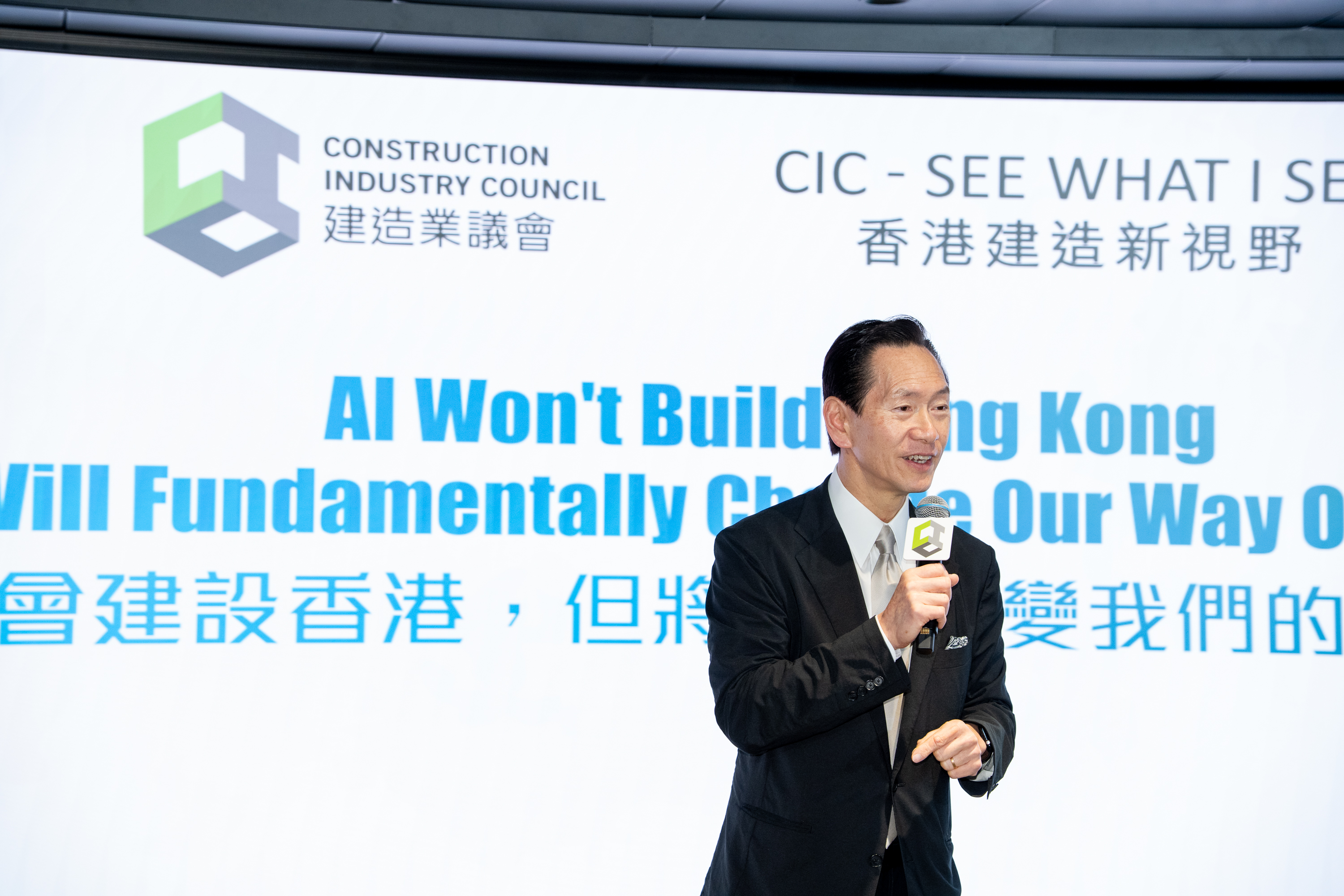
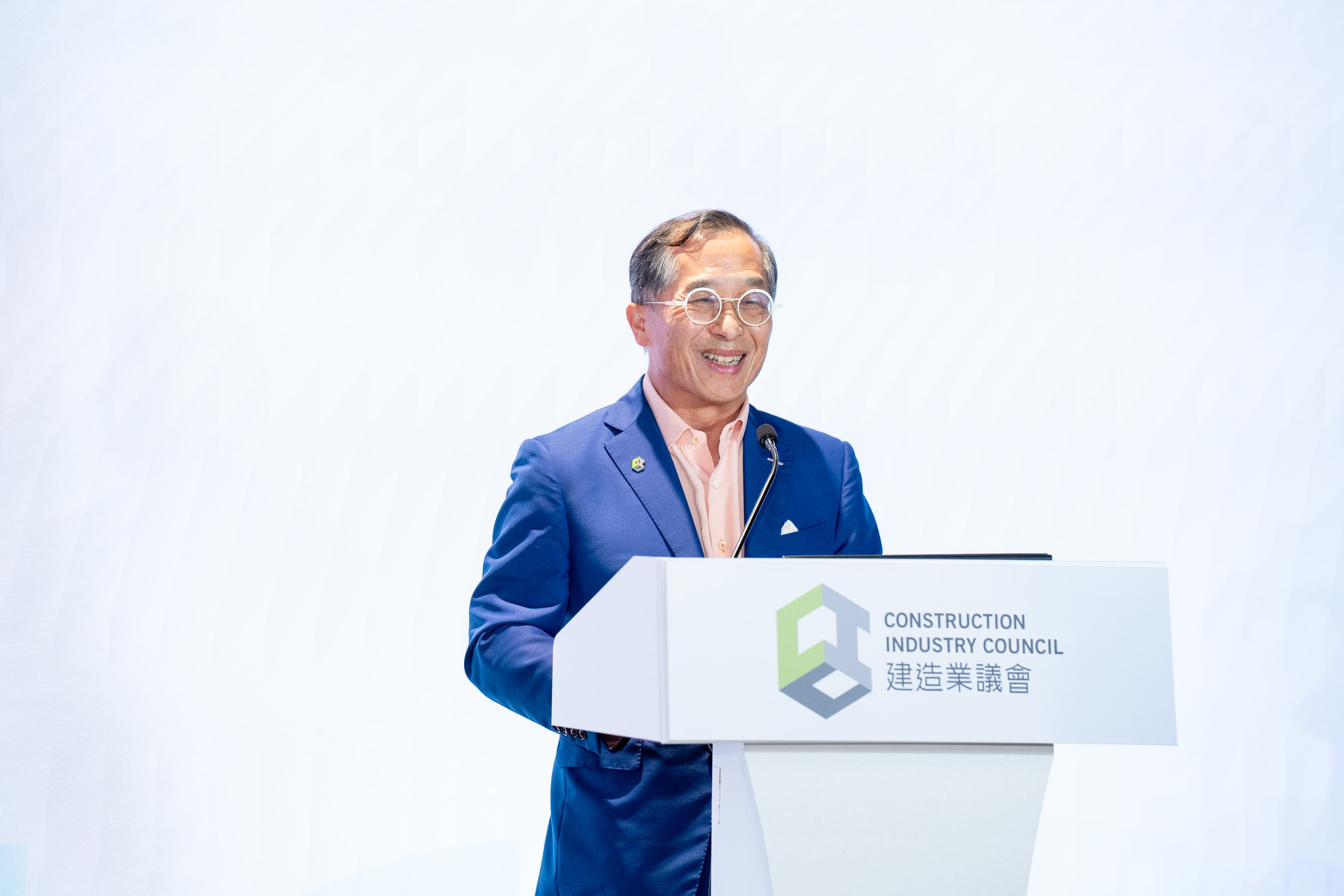
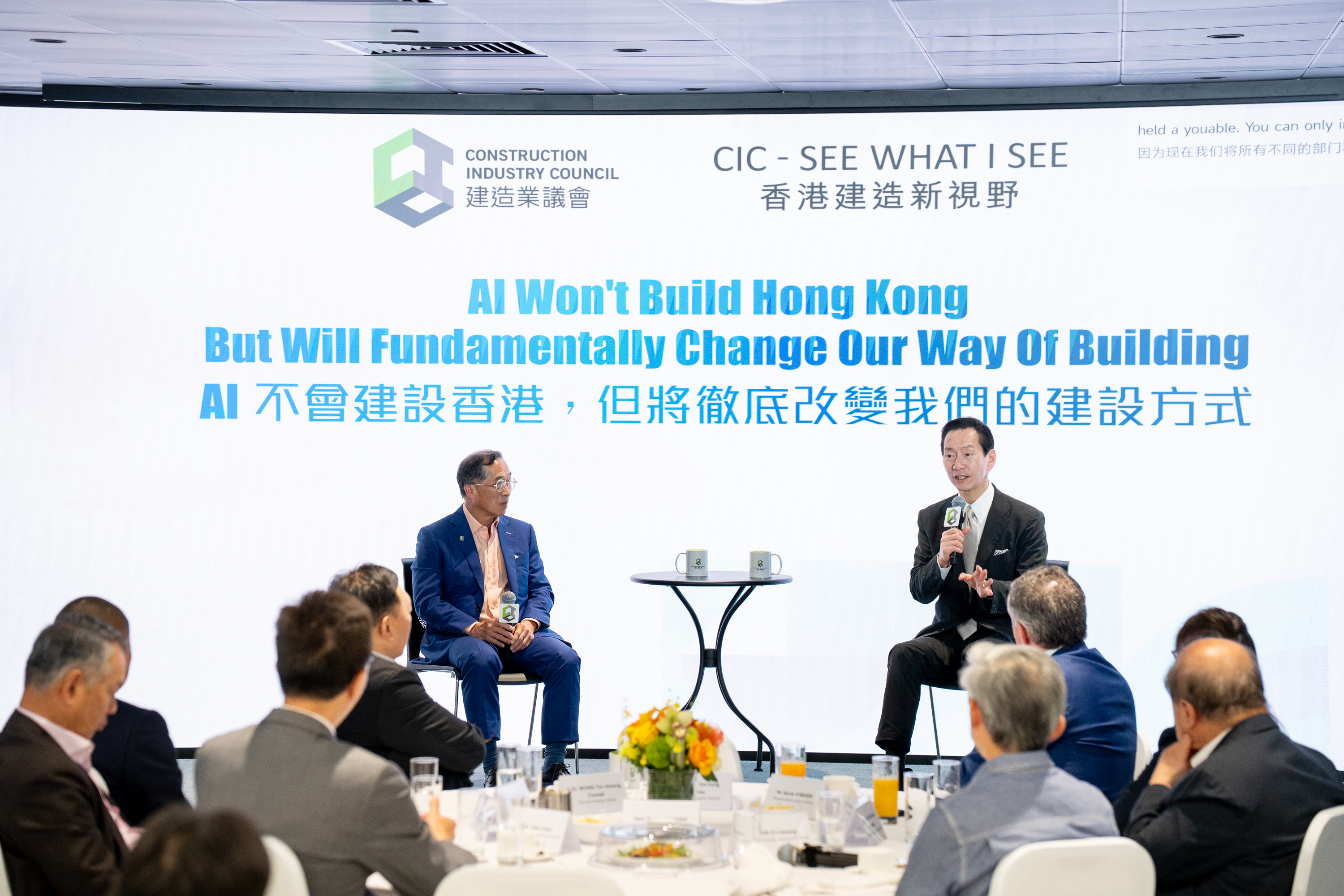
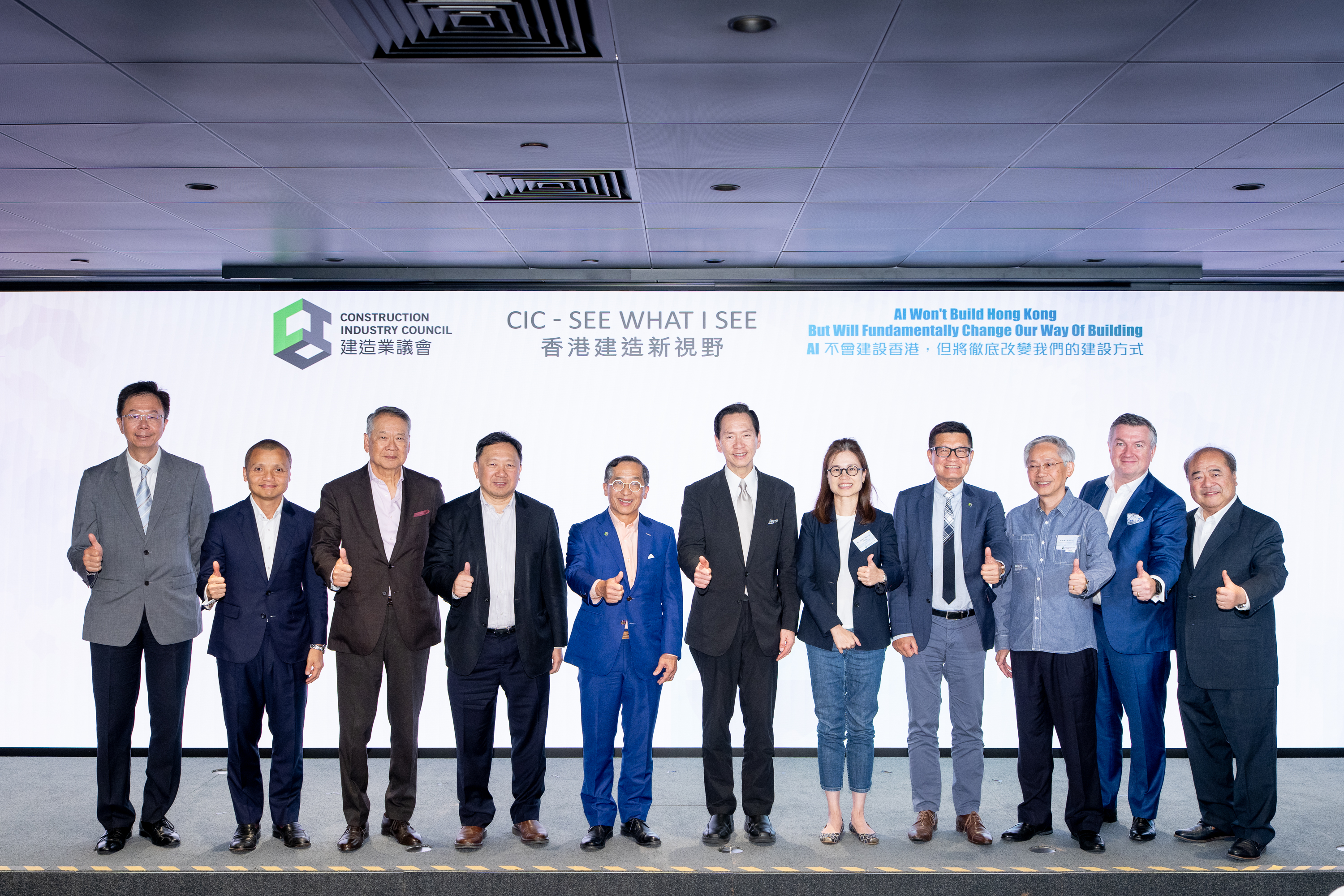
At a recent “See What I See” event, Ir Prof. Thomas HO, Chairman of the Construction Industry Council (CIC), stated that “new technologies are reshaping traditional industries and fundamentally redefining how they operate and evolve". After years of effort, the construction industry, previously characterised as “dirty, dangerous and demanding,” has been transformed into a new “3D” vision encapsulated by “total digitalisation”, “digital leadership”, and a “data-driven knowledge base”.
The industry’s evolution has extended beyond the adoption of modern technologies and techniques to impacting business operations, enhancing management efficiency, and enabling more informed and effective decision-making through data analysis. CIC has established the Centre for Future Construction (CFC) in 2025 to promote the adoption of innovative technologies, nurture industry talent, and accelerate the upgrading of industry operations. Over 7,000 industry leaders and practitioners have visited the CFC during its first year of operation.
Ir Prof. HO emphasised, "In future, construction projects must integrate AI, digital twin, robotics, augmented and virtual reality, as well as Smart Site Safety System."
Hong Kong's construction industry continues to evolve, with Modular Integrated Construction (MiC) technology becoming increasingly ubiquitous in both public and private projects. Currently, there are 150 construction projects in Hong Kong utilising MiC, 80 projects employing Multi-trade Integrated Mechanical, Electrical and Plumbing (MiMEP) technology, and 20 MiC lifts have been installed. The long-term goal is to achieve a 40% increase in the number of projects adopting MiC by 2030. MiC not only enhances productivity and site safety but also supports Hong Kong's development as a high-quality and highly productive construction hub.
AI is undoubtedly the next game-changing technology for the industry. CIC has designated 2026 as the “Year of AI”. To date, our construction industry has launched 40 AI-related initiatives and deployed 90 robots to support construction works. In July 2026, CIC further launched the AI Assistant (Construction Safety) on the CIC APP, empowering 140,000 construction practitioners to access trusted local reference materials and source documents, identify potential safety risks, and obtain practical solutions, all with just a few taps on their mobile devices.
The Potential and Governance of AI AI has become one of the most influential technological developments of our time, impacting industries and societies around the world. One of the greatest challenges is how to establish an effective governance framework. Hon Bernard CHAN, Chairman of the Our Hong Kong Foundation, echoed, “AI will impact sectors including finance, healthcare, logistics and construction, but a broad global consensus on relevant rules and standards has yet to be reached. Faced with this challenge, humanity must strengthen cooperation and jointly explore AI governance mechanisms to ensure that technological development is built on a safe, trustworthy, and responsible foundation.”
China has long placed strong emphasis on digital-driven development. As Hon CHAN noted, “The 15th Five-Year Plan is not only an important blueprint for the nation's future development, but also reflects its long-term direction in technological innovation, industrial upgrading, and high-quality development. Hong Kong must develop a deeper understanding of national development strategies and identify our city’s role and opportunities with them. Whether in smart construction or AI applications, these developments are closely aligned with the national agenda of fostering new quality productivity forces and innovation-driven development. The construction industry should therefore prepare early and participate actively.”
Hon CHAN said, "Looking ahead, whether in AI, digitalisation or other innovative technologies, Hong Kong cannot simply be a user. We must consider how to establish appropriate governance frameworks and development strategies, and fully leverage the advantages of 'One Country, Two Systems,’ understand our nation's development priorities, and combine the city’s international outlook and strengths in professional services to seize the opportunities arising from the next wave of innovative development."
In conclusion, Ir Prof. HO reiterated that while aligning with national development, Hong Kong should capitalise on its unique strengths. "We should fully leverage smart construction technologies to strengthen Hong Kong’s position as a world-class international infrastructure centre. We should also embrace the limitless possibilities of “Mi-Infinity” and make effective use of AI agents as governance frameworks and practical applications mature, progress towards Agentic AI to help place AI at the centre of Asia's future development.