We provide Construction Workers Registration service, and introduce Registered Specialist Trade Contractors Scheme as well as the Technically Competent Persons Registration Scheme to the construction industry.
We provide Construction Workers Registration service, and introduce Registered Specialist Trade Contractors Scheme as well as the Technically Competent Persons Registration Scheme to the construction industry.
As early as 2023, the Central Economic Work Conference proposed the creation of strategic emerging industries within the low-altitude economy (“LAE”), referring to economic activities between 1,000 and 3,000 metres above ground. In September 2024, Low-altitude Economy Regulatory Sandbox was launched as a pilot project in Hong Kong.
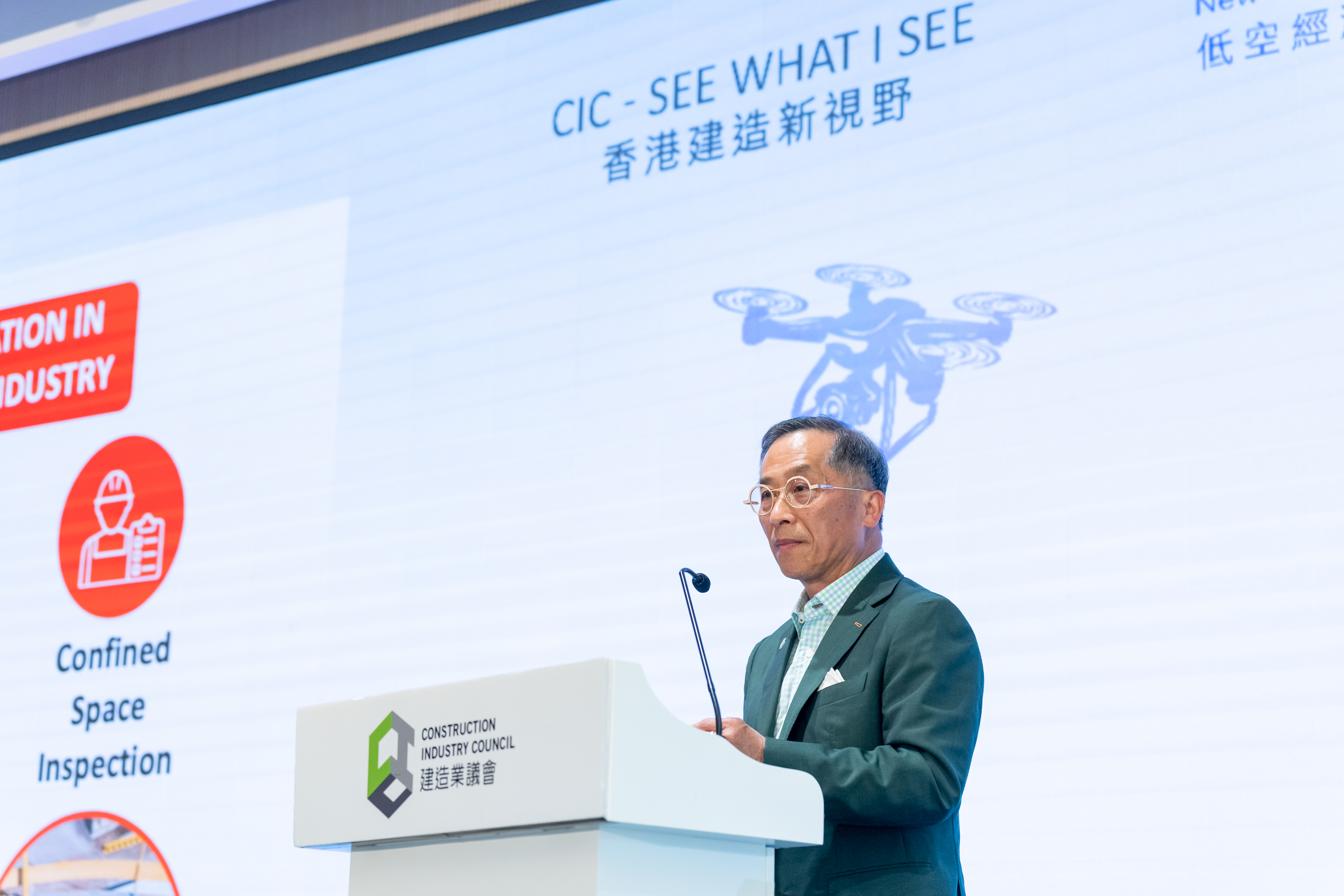
The LAE presents a wide range of application scenarios with tremendous potential for development. It can enhance urban management and business efficiency, while providing the public with a brand new smart living experience, making it an important engine for economic growth. At the recent “CIC - See What I See” event, Ir Prof. Thomas HO, Chairman of the Construction Industry Council (“CIC”), remarked, “It is time for the industry to embrace this new technology, recognise the benefits that it offers, and prepare to seize the opportunities it presents.”
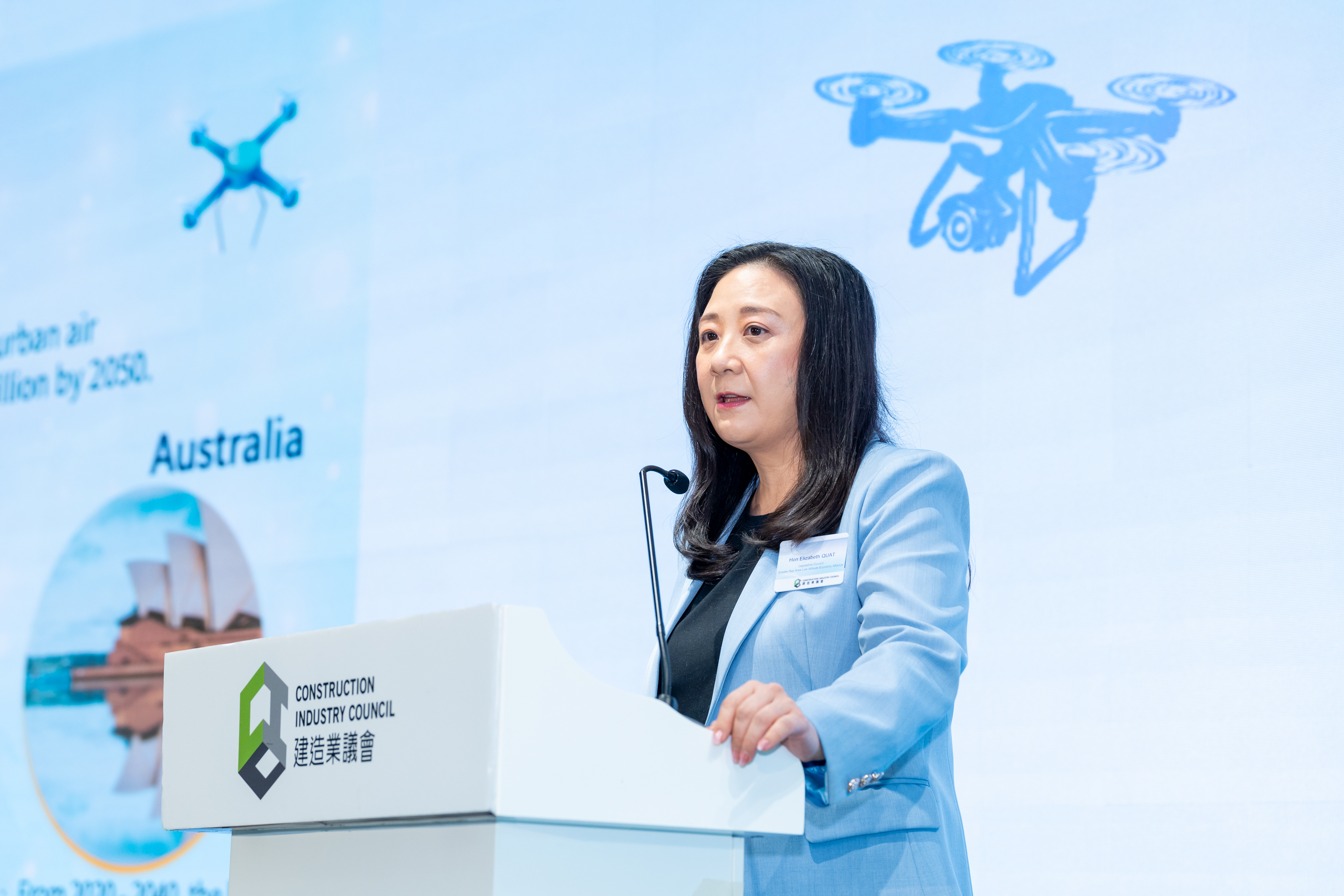
The New Altitude of Economic Development Hon Elizabeth QUAT, Legislative Council Member and Founding President of the Greater Bay Area Low-altitude Economy Alliance, was the keynote speaker at the “See What I See” event. She said, "The low-altitude economy is a strategic emerging industry for the nation and exemplifies the exploration of new quality productive forces, giving rise to the emergence of new industries and the enhancement in overall productivity.” These include technologies and infrastructure related to drone research and development, data and network services, financial insurance, and more. It can also be widely applied to logistics and transportation, tourism, smart city management, and public safety, etc.
Hon QUAT also noted that the Civil Aviation Department will amend the relevant regulations to promote the development of the LAE. These revisions will focus on three areas – relaxing restrictions on the payload capacity of drones, permitting beyond visual line-of-sight (BVLOS) operations, and introducing a special provision enabling the Director-General of Civil Aviation to authorise test flights of passenger-carrying low-altitude aircrafts.
Drones have a wide range of applications. Currently, many cities in Chinese Mainland are using drones for a variety of purposes, such as monitoring illegal waste dumping and construction, thereby improving urban management efficiency. Cross-border transportation is also a key factor in the LAE development. It is apparent that the widespread application of low-altitude operations is just around the corner.
But how will the LAE fuel development of the construction industry? Drone technology can improve efficiency, reduce risk and improve cost-effectiveness. Studies have shown that the use of drones for site inspection can save half the operating time and management expenses by 30%. Real-time high-definition images captured by drones enable management to make more effective decisions and increase efficiency by 35%.
Drones equipped with different instruments can collect real-time data for Building Information Modelling (BIM). Outside buildings, they can detect potential structural weaknesses, while inside they can be used to detect lift shafts, high-altitude locations and confined spaces, improving safety measures and the transport of heavy materials.
"The LAE can redefine the operating models of the architectural, engineering and construction industries. Traditional models are time-consuming and labour-intensive, and often have difficulties in coping with complex terrain or rapid changes”, Hon QUAT concluded. “In contrast, the new model combines the data collection capabilities of drones with the powerful analysis and visualisation functionalities of Geographic Information System (“GIS”) to generate maps, which can revolutionise construction models.”
Drones continue to collect data for the BIM database created by the Lands Department. Combined with 3D maps, this data can be used to assess the surrounding environment of construction sites, which can also be stored on the 3D Common Spatial Data Infrastructure (“CSDI”) Portal, turning Hong Kong into a smart data hub.
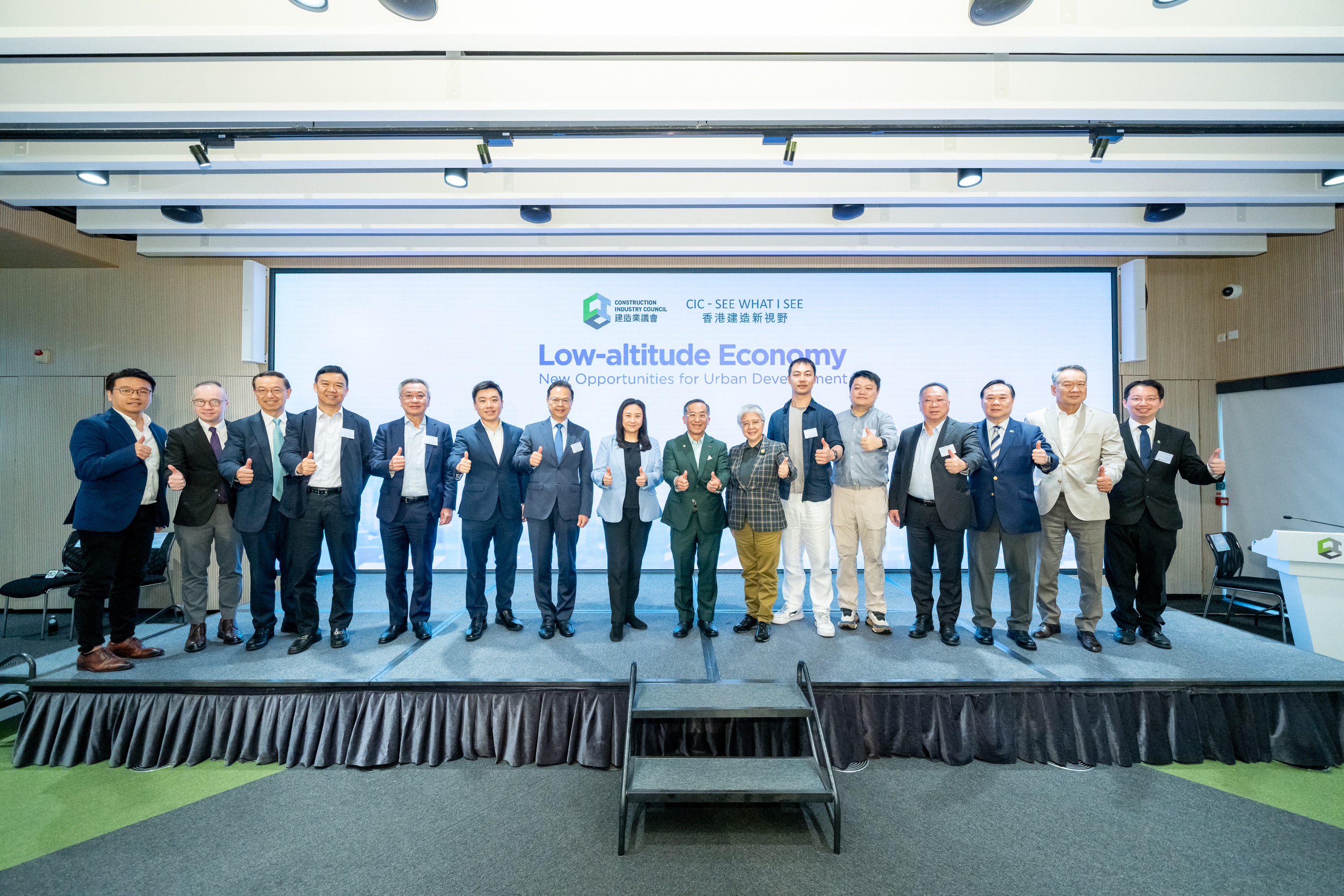
LAE Reaches New Heights The CIC has also invited LAE industry leaders to share their insights. They included Dr. CHEN Fengwen, Deputy Head, Lower Airspace Economy Research Institute of International Digital Economy Academy; Mr. SONG Hangyu, Founder and CEO of Shenzhen Keehang Tech Co, Ltd; and Mr. Desmond HO, Founder and CEO of Alpha AI.
Regarding which technological developments will be key to promoting the LAE in the future, Dr. CHEN said, “The most important factor is the technology that controls airspace operations, such as communication and sensing technologies.” Mr. HO also emphasised that cities should establish drone corridors and utilise GIS, 5G-Advanced technology, radar and satellites to establish a management platform.
Mr. HO pointed out that while environmental factors such as wind speed and birds are difficult to control, he suggested that the government could open up the spectrum and promote infrastructure development, such as 5.5G technology and satellites. Mr. SONG added that instead of prioritising rules and regulations, the government should adopt a more open approach to evaluating development needs.
Talent is indispensable to the development of the LAE. “In addition to drone pilots, we also need to train ground operators such as schedulers, managers, maintenance personnel and route planners", Mr. SONG observed. Mr. HO noted that as technology matures and more data is collected, there will be an increasing need for experts who can simulate and analyse the data to derive deeper insights. In that respect, Dr. CHEN stressed on the necessity for more interdisciplinary professionals.
In summary, Mr. HO encouraged the industry to leverage drones and data to drive urban development and enhance construction safety. Mr. SONG expressed his hope that Hong Kong could serve as a global conduit for the Chinese Mainland’s LAE. Dr. CHAN emphasised that LAE is a novel concept that should be developed through innovative and creative approaches.
The Ultimate Potential of LAE The Greater Bay Area Low-altitude Economy Alliance, established in 2024, has signed Memoranda of Understanding with a number of tertiary education institutions and has launched 38 pilot projects involving various enterprises, universities, research and public institutions, and government departments through the Low-altitude Economy Regulatory Sandbox. The Alliance now aims to further accelerate the development of LAE. “We are urging the government to expedite the launch of the second batch of projects, including cross-border and passenger transportation services”, said Hon QUAT.
The LAE represents a trillion-dollar blue ocean market. "Hong Kong can serve as a 'super connector' and 'super value creator' in the development of LAE”, said Hon QUAT. “By collaborating with Greater Bay Area cities, we can position the region as a pioneer and demonstration zone for the global LAE, assisting Chinese enterprises in expanding globally, and facilitating Hong Kong’s deeper integration into the national development agenda.”
Ir Prof. Thomas HO also believes that it is essential for Hong Kong to becoming a testing ground and international centre for LAE. This requires the integration of LAE into urban planning and other development initiatives. "Technological hardware establishes the foundation for development, but software determines its potential. Factors such as talent, knowledge, education, and supportive policies can elevate LAE to new heights, and the CIC is prepared to play a pivotal role”.
To promote the adoption of new technologies in the construction industry, the CIC has launched the Centre for Future Construction (“CFC”) at the Hong Kong Institute of Construction – Kowloon Bay Campus in June 2025, which is envisioned as a hub for learning, knowledge-sharing, and nurturing a new generation of construction talent proficient in the latest technologies. With the opening of the CFC, the CIC aims to inspire innovative thinking, cultivate future industry leaders, and demonstrate our city’s leadership and commitment to embracing new technologies.