We provide Construction Workers Registration service, and introduce Registered Specialist Trade Contractors Scheme as well as the Technically Competent Persons Registration Scheme to the construction industry.
We provide Construction Workers Registration service, and introduce Registered Specialist Trade Contractors Scheme as well as the Technically Competent Persons Registration Scheme to the construction industry.
Transportation and construction are inextricably linked. As an international metropolis, Hong Kong faces ever-increasing demand for transportation infrastructure, making innovative solutions crucial to improving transportation efficiency.
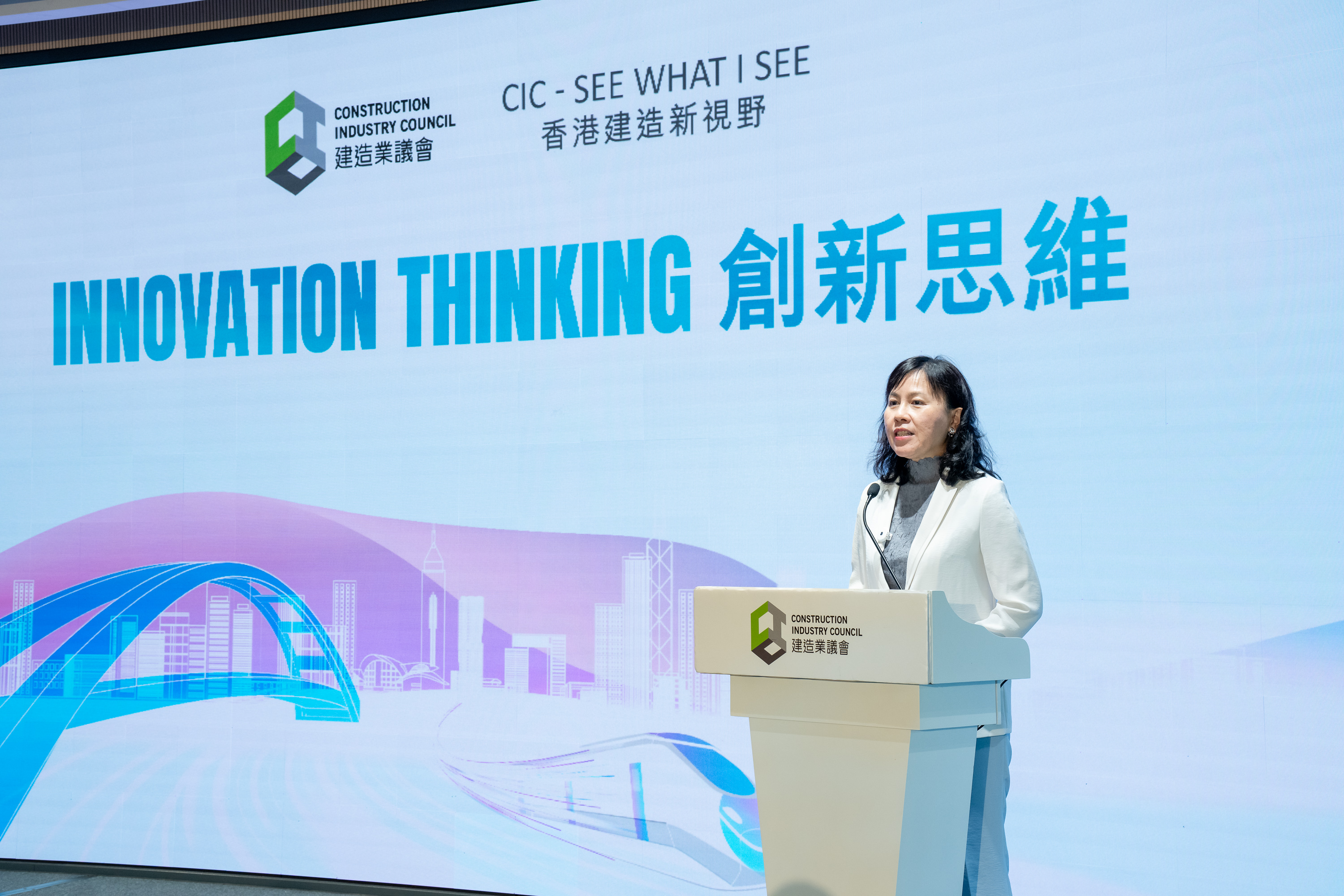
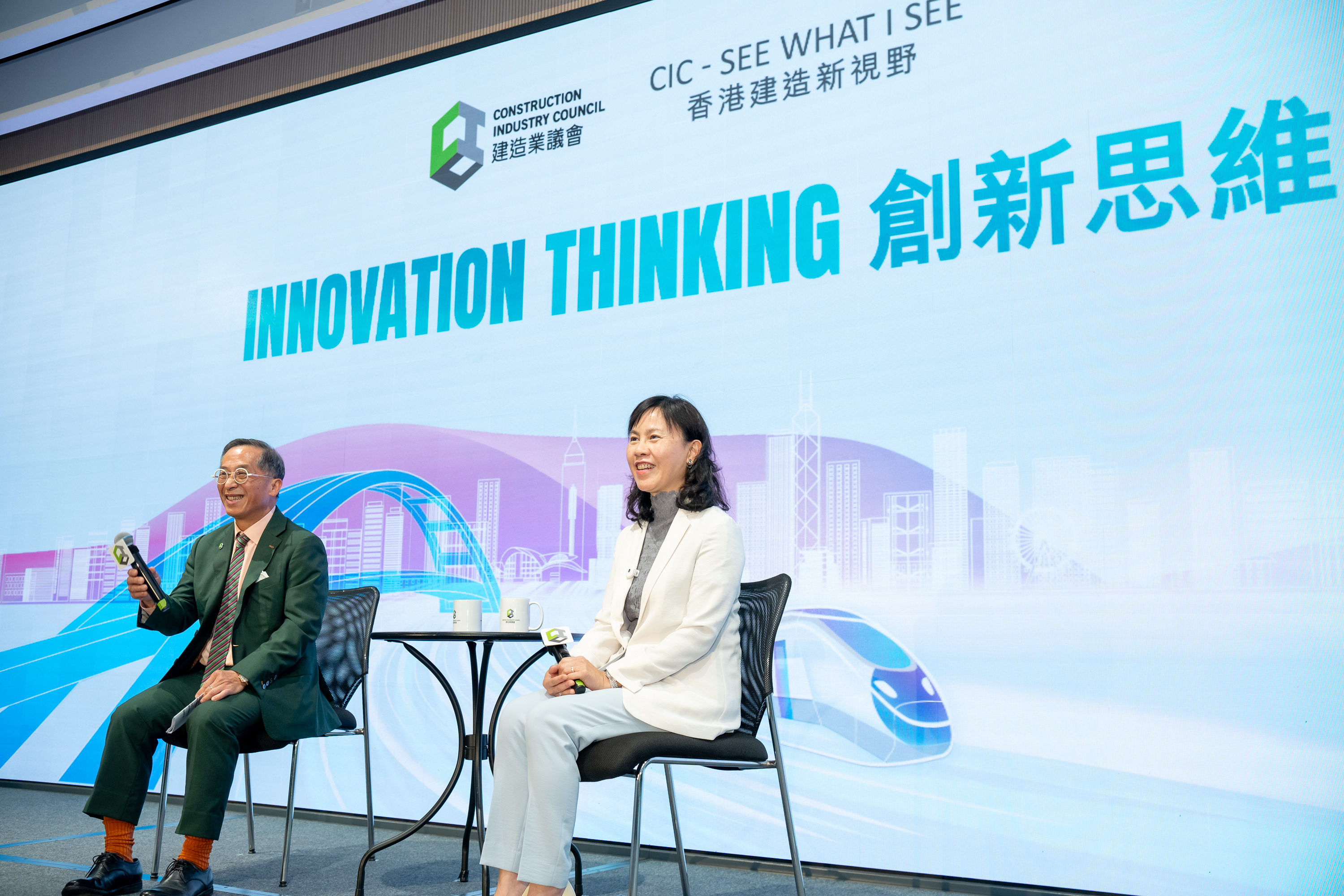
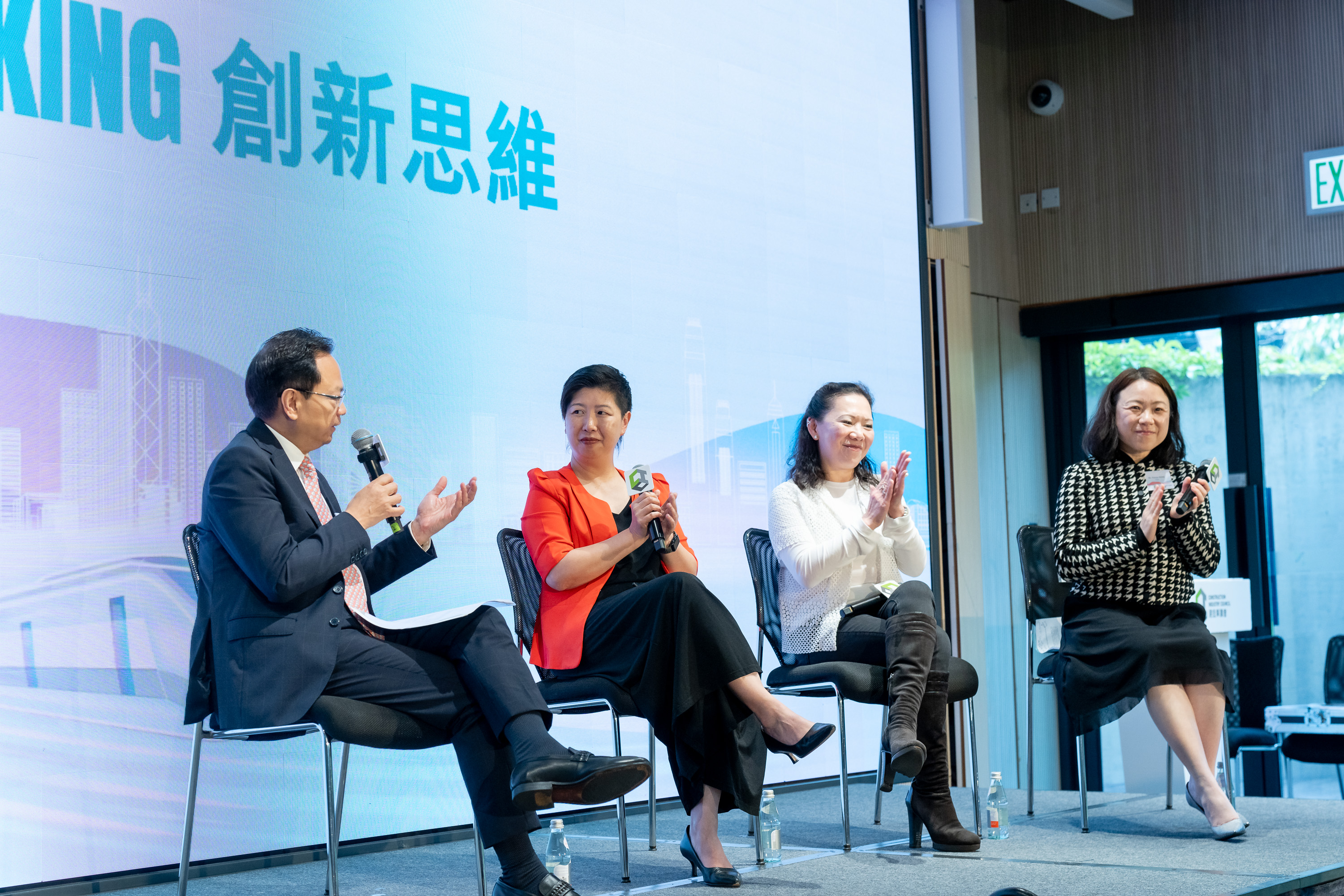
At the “See What I See" event, Ms. Mable CHAN, Secretary for Transport and Logistics, joined industry experts to share insights on innovative transportation solutions in Hong Kong. They explored how artificial intelligence (AI) and other technologies can be leveraged across land, sea and air to realise a vision for Hong Kong’s future.
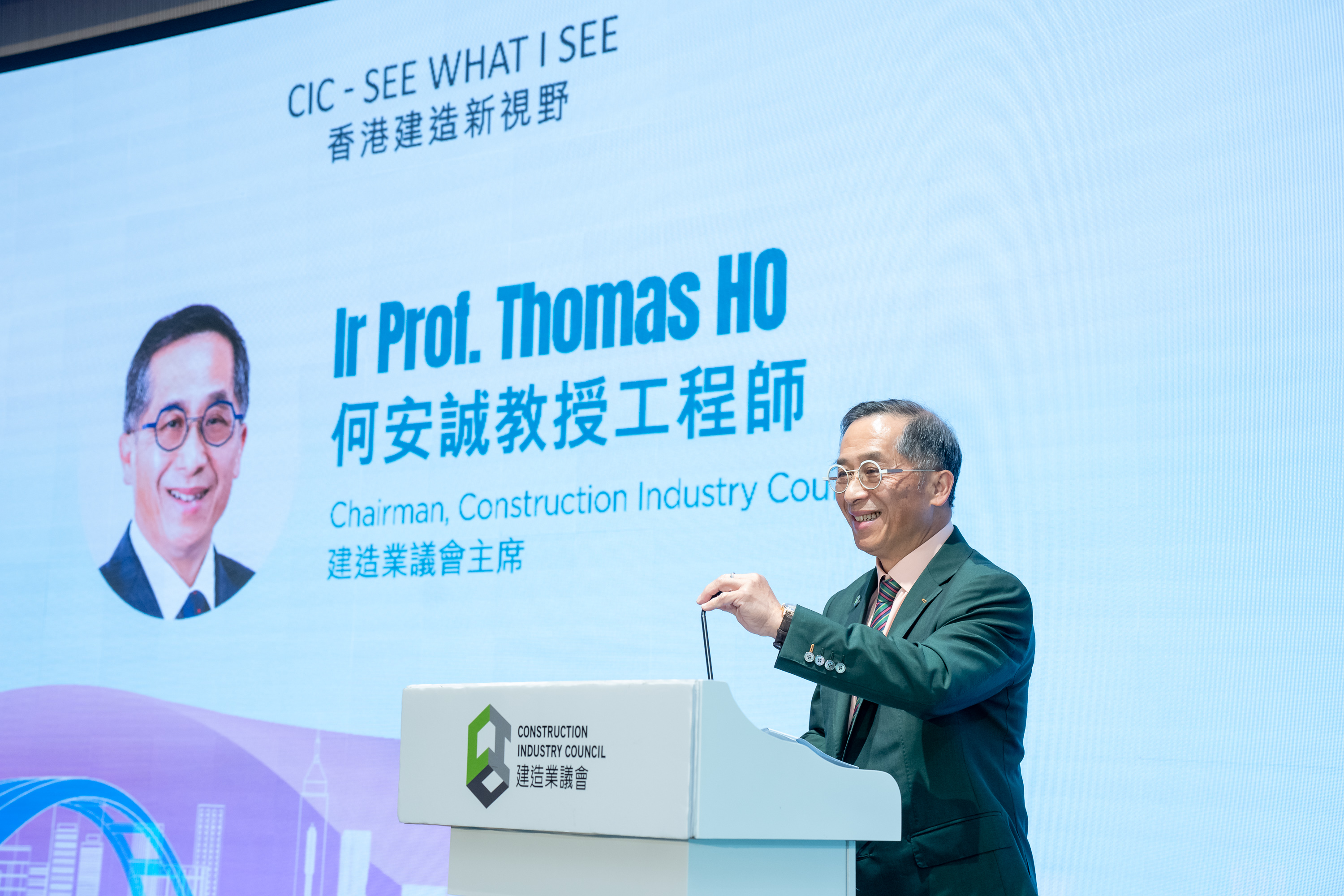
Turning Innovation into Application Ir Prof. Thomas HO, Chairman of the Construction Industry Council (CIC), noted that continuous change is essential for achieving a better future. Innovation and practical action are vital.
Ir Prof. HO shared his recent experiences in the Greater Bay Area, particularly referencing Shenzhen's Smart Tower Crane system. The system utilises advanced technologies such as Light Detection and Ranging (LiDAR) and the BeiDou Navigation Satellite System to enhance the efficiency and safety of tower crane operations. Built on the principle of “see clearly, see distantly, and see accurately”, it significantly mitigates the difficulties of relying solely on ground workers for instructions, and facilitates easier planning of lifting routes and collision avoidance.
In addition to examining new technologies in the Greater Bay Area, the CIC has inaugurated the Centre for Future Construction, featuring five key zones: Digital Twin Hub, Smart Site Safety System Hub (4S Hub), Artificial Intelligence (AI) Hub, Robotics Hub and Immersive Hub. Through showcasing a range of technologies, it aims to deepen the industry's understanding of construction technology advancements and promote collaboration, exchange and practical learning.
Ir Prof. HO urged the construction industry to embrace innovation and share ideas, emphasising that innovation must be goal-oriented to effect real change. With technological advancements, the industry bears the responsibility to collaboratively explore new solutions that improve work efficiency and safety, helping to position Hong Kong as a truly smart city.
Dual innovations: Policy and Technology
During the seminar, Ms. Mable CHAN mentioned that the event coincided with the launch of the government’s HKeToll system, highlighting Hong Kong's global position in infrastructure development. She pointed out that Hong Kong’s public transport system ranks second globally, while its infrastructure ranks ninth – a testament to government efforts. However, she acknowledged that construction costs remain high.
Hong Kong’s status as a highly developed international city, characterised by dense construction and a complex geographical environment, presents challenges. Construction sites are often close to residential areas, railways and major roads, leading to escalating construction costs due to time constraints and transportation difficulties. Ms. CHAN stated, "We must further improve efficiency through innovative approaches, especially in policy", emphasising the government’s ongoing efforts to simplify cumbersome procedures, including those related to architectural design and engineering approval, to facilitate project advancement. Citing the Smart and Green Mass Transit System in Kai Tak as an example, Ms. CHAN described how the government conducts early tendering during procurement and develops procedures simultaneously with detailed design, expediting the overall timeline from planning and design to actual construction.
Ms. CHAN further explained that the Low Altitude Economy (LAE) could significantly improve building safety and efficiency. The government has begun promoting the use of drones for building inspections, window cleaning, and material transport, reducing labour costs and mitigating risks during construction. She underscored the importance of regulatory support, highlighting government initiatives to promote LAE through improvements in legislation and regulation. This will help accelerate the application of drone technology and foster innovative projects and experimental opportunities.
Regarding marine engineering, the latest technologies in the Hetao Shenzhen-Hong Kong Science and Technology Innovation Co-operation Zone facilitate bridge construction even in complete darkness, remarkably reducing construction time and minimising daytime disruptions for road users. On land, an automated tunnel toll collection system has already improved traffic efficiency. The Hung Shui Kiu-to-Qianhai Railway, currently under construction, is anticipated to facilitate materials and technology exchange between the two regions going forward. Ms. CHAN emphasised that such technologies represent not just technical application, but a new perspective on urban development. "Whether by land, sea, or air, innovative technologies open new possibilities,” she said. The government aims to guide the industry towards intelligence and automation, addressing labour shortages and the challenges posed by an aging population, thereby enhancing efficiency and safety across the construction sector. Ms. CHAN urged industry professionals to actively participate, propose innovative ideas, and collaborate with the government to advance developments in transport and logistics, creating greater possibilities for Hong Kong's future.
Participation and Collaboration During the Q&A session, Prof. LING Kar-kan, Chairman of the Hong Kong Housing Society, proposed that the government collaborate with the CIC to establish a transport museum in the Northern Metropolis. This initiative would showcase Hong Kong's historical achievements in transport while fostering cultural, educational, and transport-related exchanges.
In the panel discussion, experts stressed the essential role of collaboration among stakeholders. Ir Eva KONG, General Manager – Strategy and Business Services (Capital Works) at MTR Corporation Limited, stated, "Innovation and technology must be people-oriented". She highlighted the importance of timely and thorough consideration of stakeholder opinions and needs in ensuring project success. She shared her experiences from the construction of Hung Shui Kiu Station, where the team cooperated closely with designers and contractors to ensure that existing railway operations were not disrupted, thereby improving efficiency and minimising conflicts during construction.
Dr. Rosana WONG, Deputy Chair of Yau Lee Holdings Limited, discussed the need for collaboration and effective resource utilisation, emphasising the government's pivotal role in supporting innovation. "Transportation and logistics are not just an ecosystem but a complete ecosystem", she remarked. Dr. WONG encouraged the industry to explore technologies such as Narrowband Internet of Things (NB-IoT) and Modular Integrated Construction (MiC) and to connect with diverse companies to drive innovation.
Ms. Theresa YEUNG, Arup’s Managing Principal, East Asia, expressed her satisfaction as a consultant seeing the government and public organisations integrate innovative technologies into their operations. For instance, various departments are investigating the incorporation of intelligent reconnaissance systems in bridge construction, which can automatically alert police and fire departments in case of road accidents, enabling rapid responses and the restoration of normal traffic flow.
Ms. Mable CHAN reiterated her call for industry professionals to actively participate and collaborate, driving greater advancements in innovation and technology application in Hong Kong. This will not only enhance the competitiveness of various industries but also improve the quality of life for citizens.
Innovation is the Path to Development In conclusion, Ir Prof. Thomas HO remarked that innovative thinking illuminates the way forward. After listening to the insights and inspirations of the seminar participants, he encouraged everyone to continue supporting innovation and placing people's needs at the forefront, to ensure a hopeful future, as human needs should always be prioritised for urban planning. He also looks forward to these ideas becoming reality, making a lasting impact on Hong Kong’s sustainable development, security, mobility, and liveability.