We provide Construction Workers Registration service, and introduce Registered Specialist Trade Contractors Scheme as well as the Technically Competent Persons Registration Scheme to the construction industry.
We provide Construction Workers Registration service, and introduce Registered Specialist Trade Contractors Scheme as well as the Technically Competent Persons Registration Scheme to the construction industry.
The Hong Kong construction industry is at a critical juncture of transformation and upgrading, with smart construction serving as its core engine. To drive industry development, we cannot solely rely on introducing technologies; we must also translate cutting-edge experiences into local momentum. As an industry pioneer, the Construction Industry Council (CIC) has been actively promoting the application of local innovative technologies. Through a multi-pronged strategy encompassing study tours, platform building, and talent training, CIC ensures that technology and experience complement each other to collectively propel the steady advancement of Hong Kong's construction industry.
Wuhan Delegation: The Deep Integration of Technology, Knowledge, and Talent
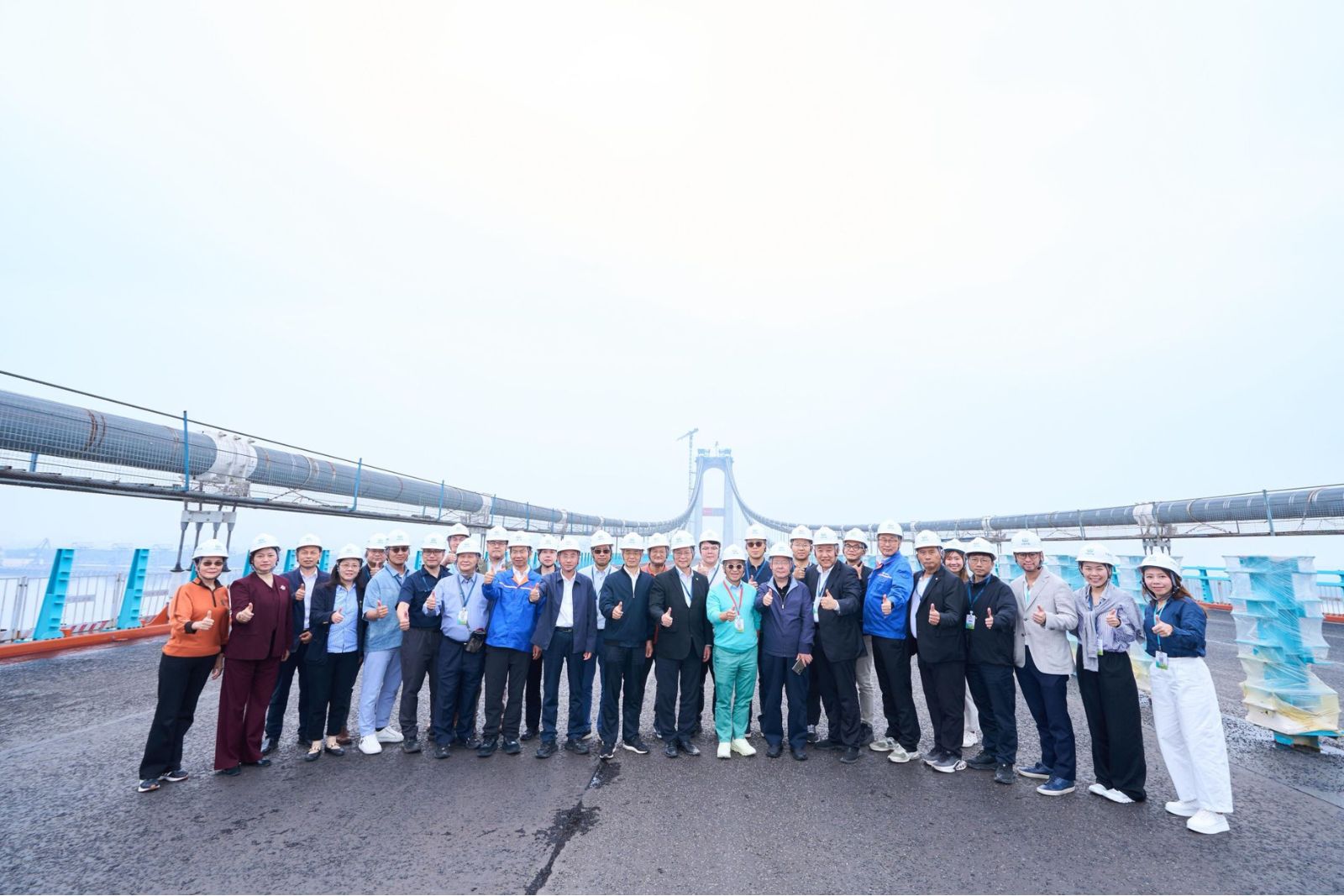
Last month, I led a CIC delegation on a study tour to Wuhan, where I profoundly realised that smart construction is the culmination of the deep integration of engineering knowledge, digital engineering systems, construction methods, and talent. During the visit, we toured multiple smart construction and infrastructure projects, witnessing how the Mainland leverages innovative technologies to comprehensively enhance project safety, quality, efficiency, and long-term operational capabilities. From the intelligent centralised control of tower cranes to the real-time monitoring of over 10,000 sensor points on airport runways; from the digital twin smart control system of a mega bridge to the millimetre-level precision construction of a library using Building Information Modelling (BIM) technology—none of these technologies operate in isolation. Instead, they form an interconnected smart construction ecosystem with engineering knowledge, construction workflows, and talent teams.
This study tour provided a clear direction and valuable reference for the transformation and upgrading of Hong Kong's construction industry. As the construction industry enters a new phase of digitalisation and intelligence, CIC will continue to lead the industry in adopting innovative technologies, driving the transformation and upgrading of construction models, and helping Hong Kong's construction industry stride towards sustainable development.
GASCCE: Bridging Global Wisdom with Local Industry Needs
Returning to Hong Kong from the cutting-edge experiences in Wuhan, CIC is committed to building platforms that bridge global wisdom with local industry needs. The upcoming CIC Global AI and Smart Construction Conference and Exhibition (GASCCE), to be held from 24 to 25 June at the Hong Kong Science Park, is not only an international mega-event but also a crucial platform for the Hong Kong construction industry to proactively align with the Nation's "15th Five-Year Plan" and drive productivity development.
GASCCE focuses on artificial intelligence (AI), robotics technology, the low-altitude economy, and other smart construction technologies. As a flagship event of the 2026 "Year of AI", the conference will gather global leaders, experts, practitioners, and technology suppliers. Several top-tier international and local experts will serve as guest speakers, including Dr. Doranda DOO, International Chief AI Officer of the World Digital Technology Academy, who will share how AI is redefining smart construction, and Dr. Will CAVENDISH, Global Digital Services Leader at Arup, who will share insights on practising AI at the engineering frontline. Ms. Bernadette LINN, Secretary for Development, Ir Ricky LAU Chun-kit, Permanent Secretary for Development (Works) and Ir Prof. Alfred SIT Wing-hang, Chairperson of the Committee on Smart Construction of CIC, will also deliver keynote speeches.
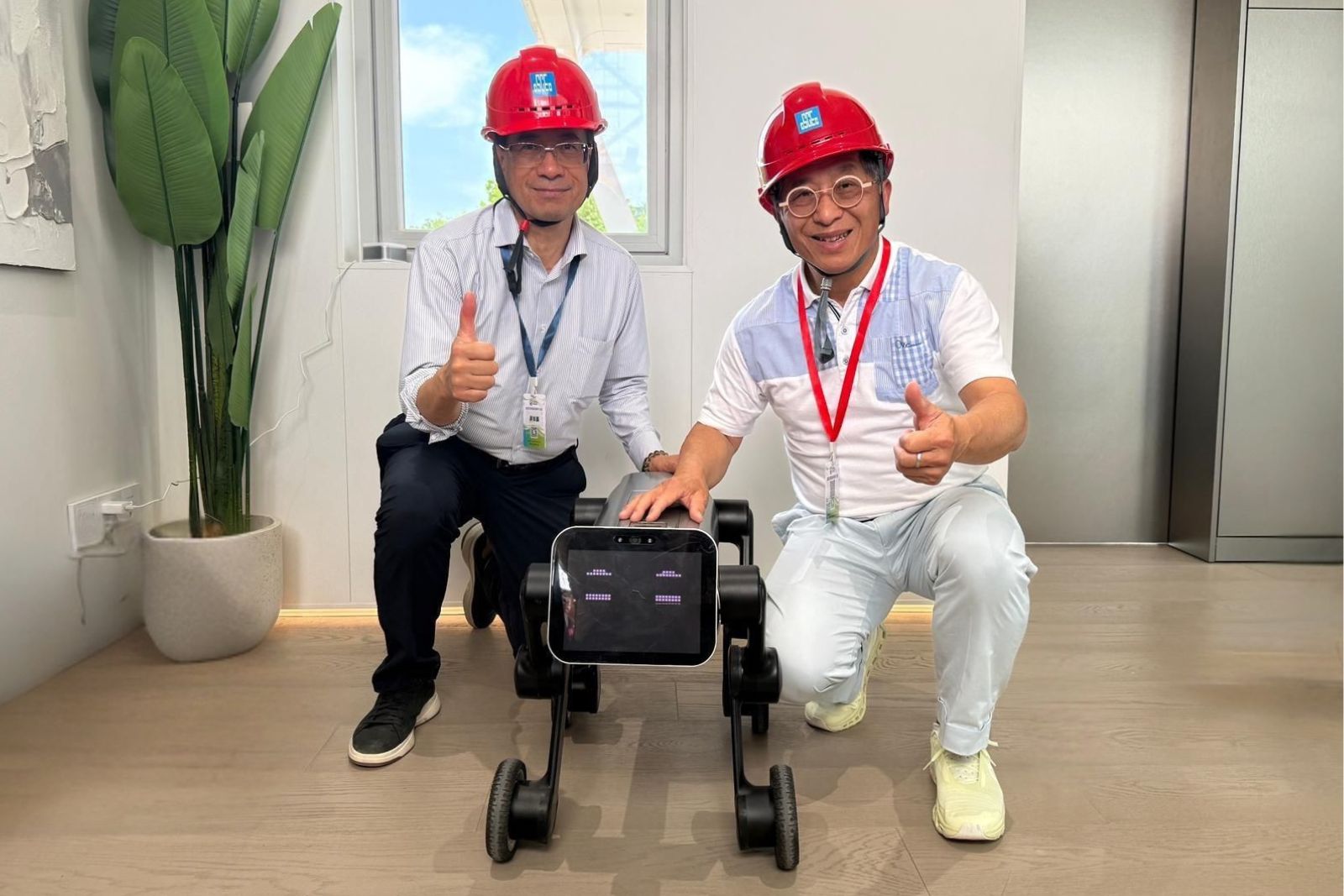
Concurrently, the venue will showcase multiple AI+ smart construction technologies representing different construction stages, allowing participants to experience firsthand how technology translates from concept to practical operation. These include a smart tower crane system integrating high-precision sensors, AI visual algorithms, and remote-operated technology; smart solutions spanning the entire building lifecycle; digital twins that convert BIM into operational data; and digital tools enabling teams to step into BIM models via virtual reality (VR) to improve the quality of construction work.
This is a golden opportunity for learning and exchange. I strongly encourage all industry practitioners to actively participate in GASCCE and collaboratively transform global wisdom into the competitive advantage of Hong Kong's construction industry.
Webinars: A Warm-up to Global Exchange
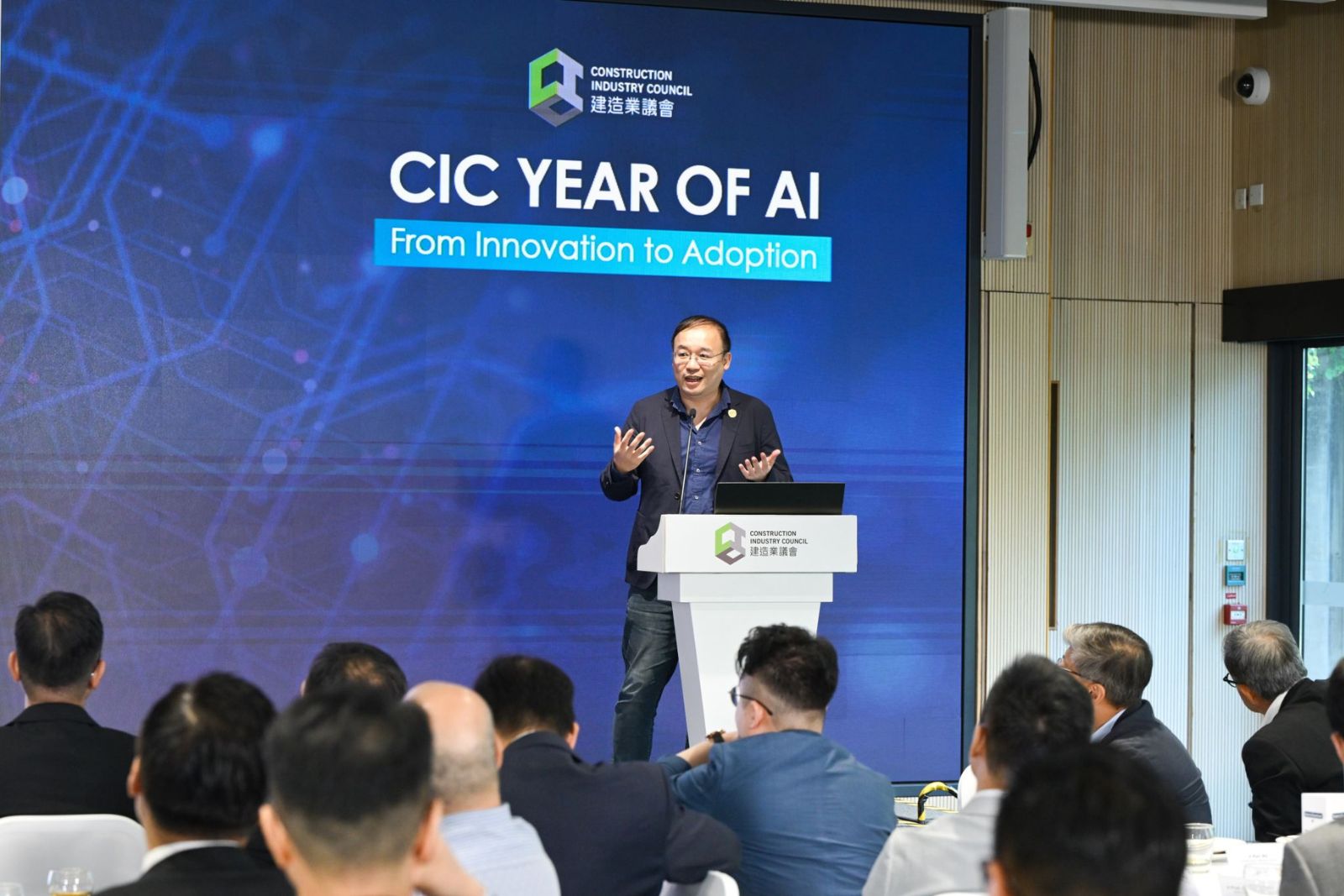
We previously prepared the "CIC Year of AI: From Innovation to Adoption" webinar for the industry, allowing practitioners to grasp the current state for AI implementation ahead of the international mega-event. This webinar aimed to help the industry understand how AI and robotics technology move from concept to practical application. Participants had the opportunity to gain an in-depth understanding of approximately 30 AI implemented innovative solutions and over 70 real-world robotics technology adoption cases, some of which have been successfully applied in over 250 local projects covering works of various scales. The figures behind this reflect the scale, speed, and maturity of AI application in Hong Kong's construction industry, which is truly encouraging.
Site Safety: The Bedrock of Innovative Development
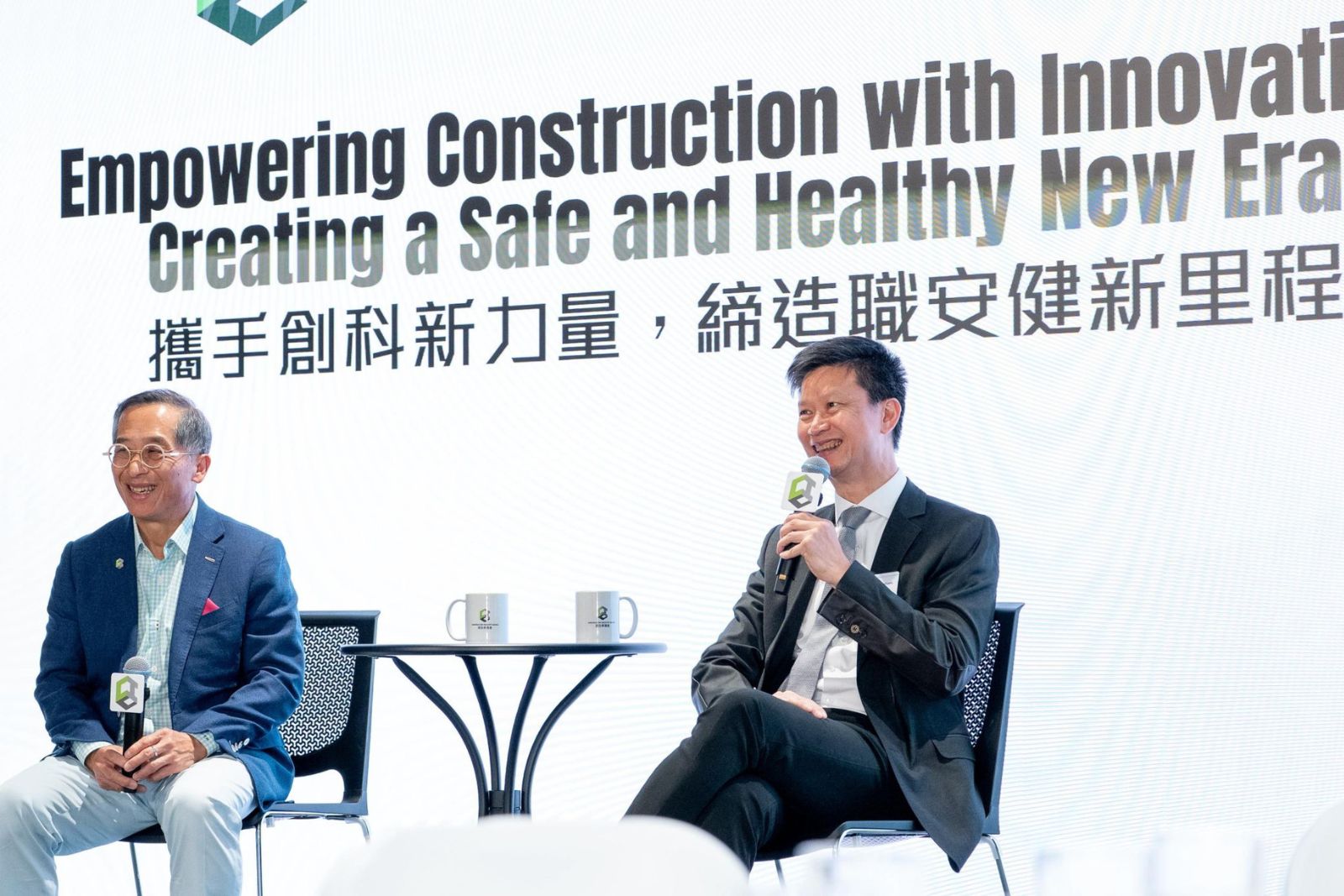
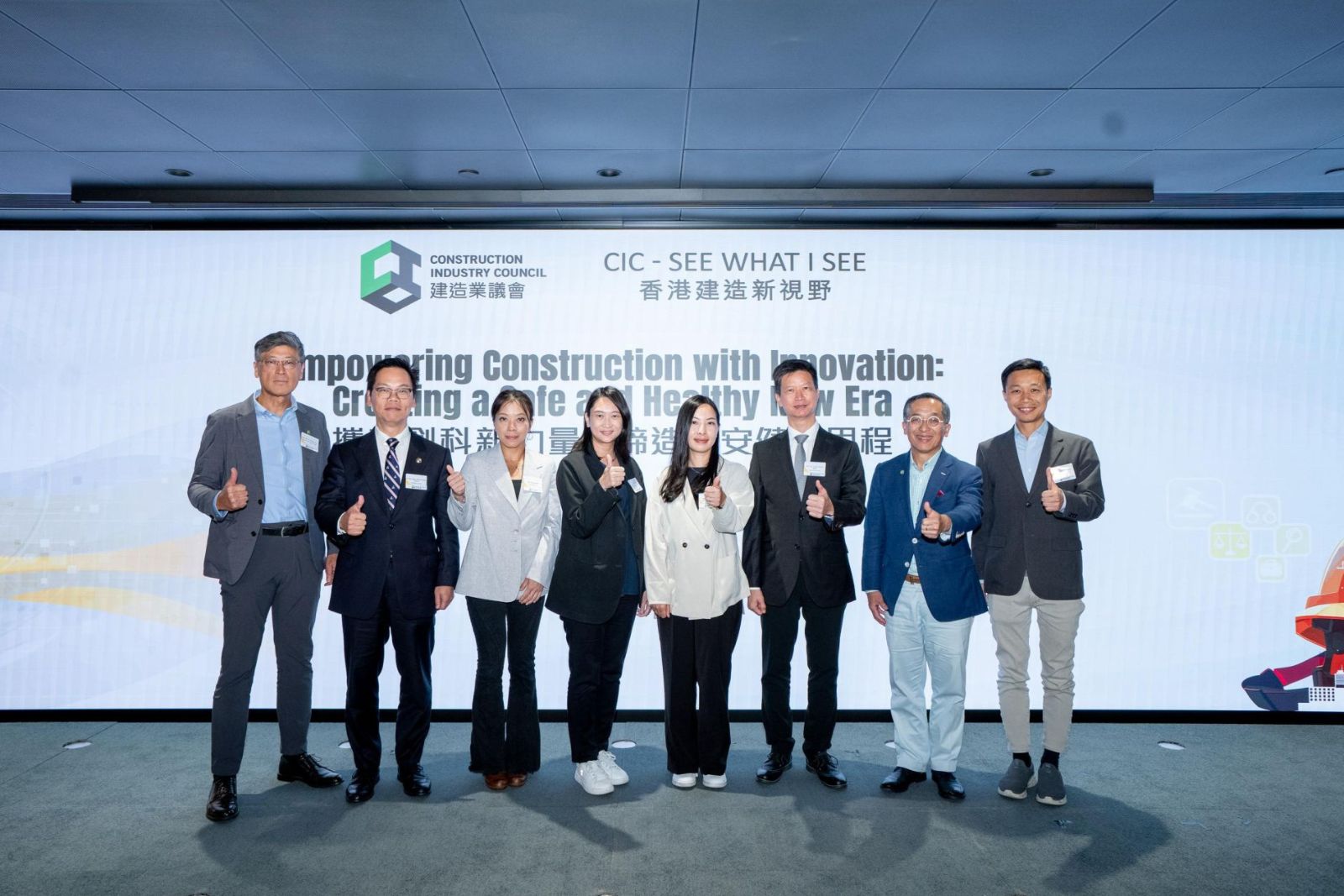
The ultimate goal of smart construction is to make technology serve people, especially in safeguarding the safety of every frontline worker. Last month, CIC organised the "CIC See What I See" event, inviting Mr. Sam HUI Chark-shum, Commissioner for Labour, to engage in profound exchanges with the industry.
At the event, Mr. HUI introduced how Hong Kong enhances the efficiency of inspections, evidence collection, investigations, and risk monitoring through innovative tools, thereby achieving smarter, data-driven site safety. He pointed out that innovative tools such as drones, handheld Light Detection and Ranging (LiDAR) scanners, and AI safety equipment are gradually transforming the safety management models of Hong Kong construction sites. He also emphasised that innovation must be supported by flexible regulation to yield practical benefits.
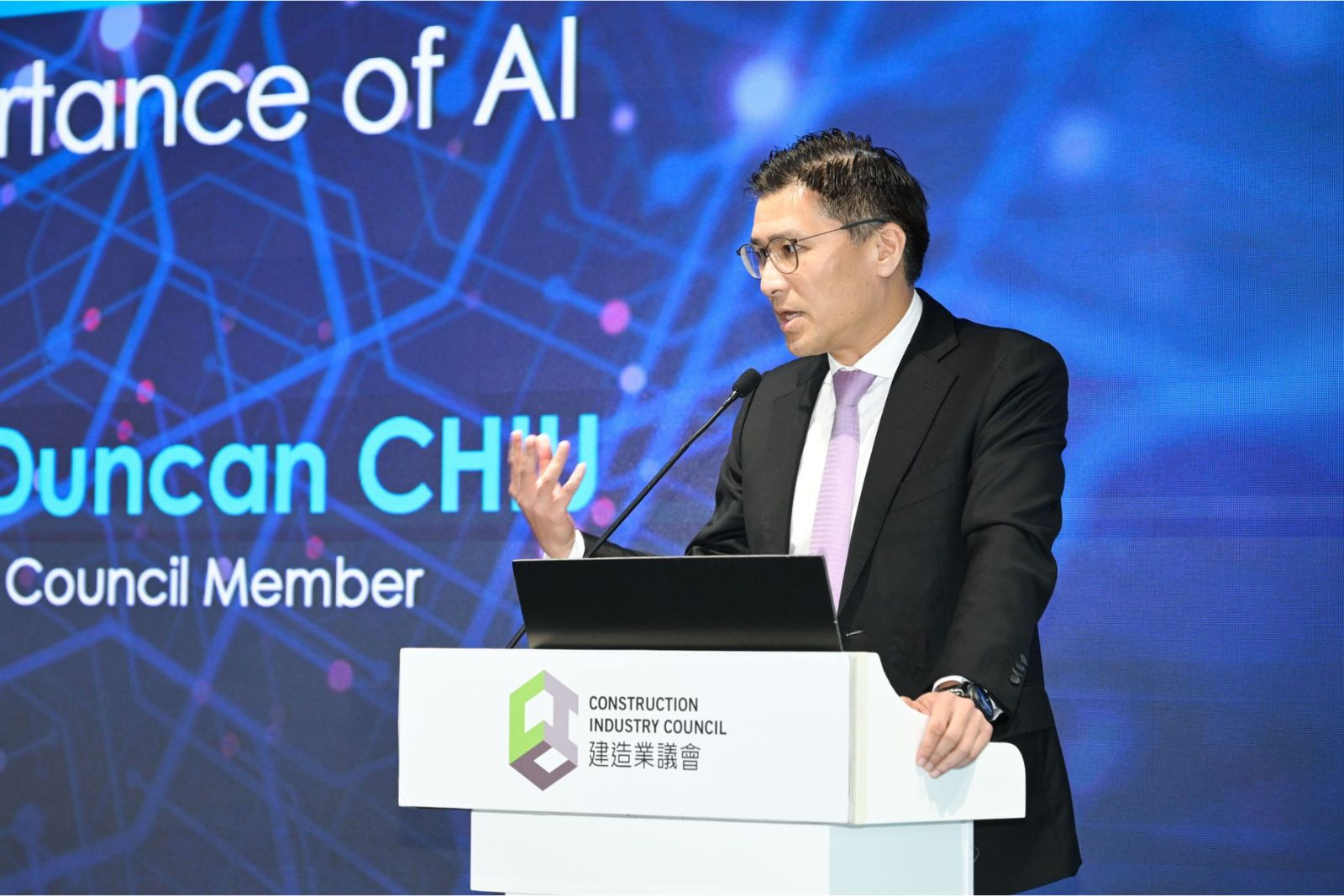
I also mentioned during the event that innovation should be founded upon safety and exquisite craftsmanship. Although AI and robotics technology are catalysts for industry advancement, the well-being and safety of workers remain the core of the industry. Therefore, site safety must be integrated into daily decision-making.
Frontline Training: Passing on Technology and Safety Awareness to the Next Generation
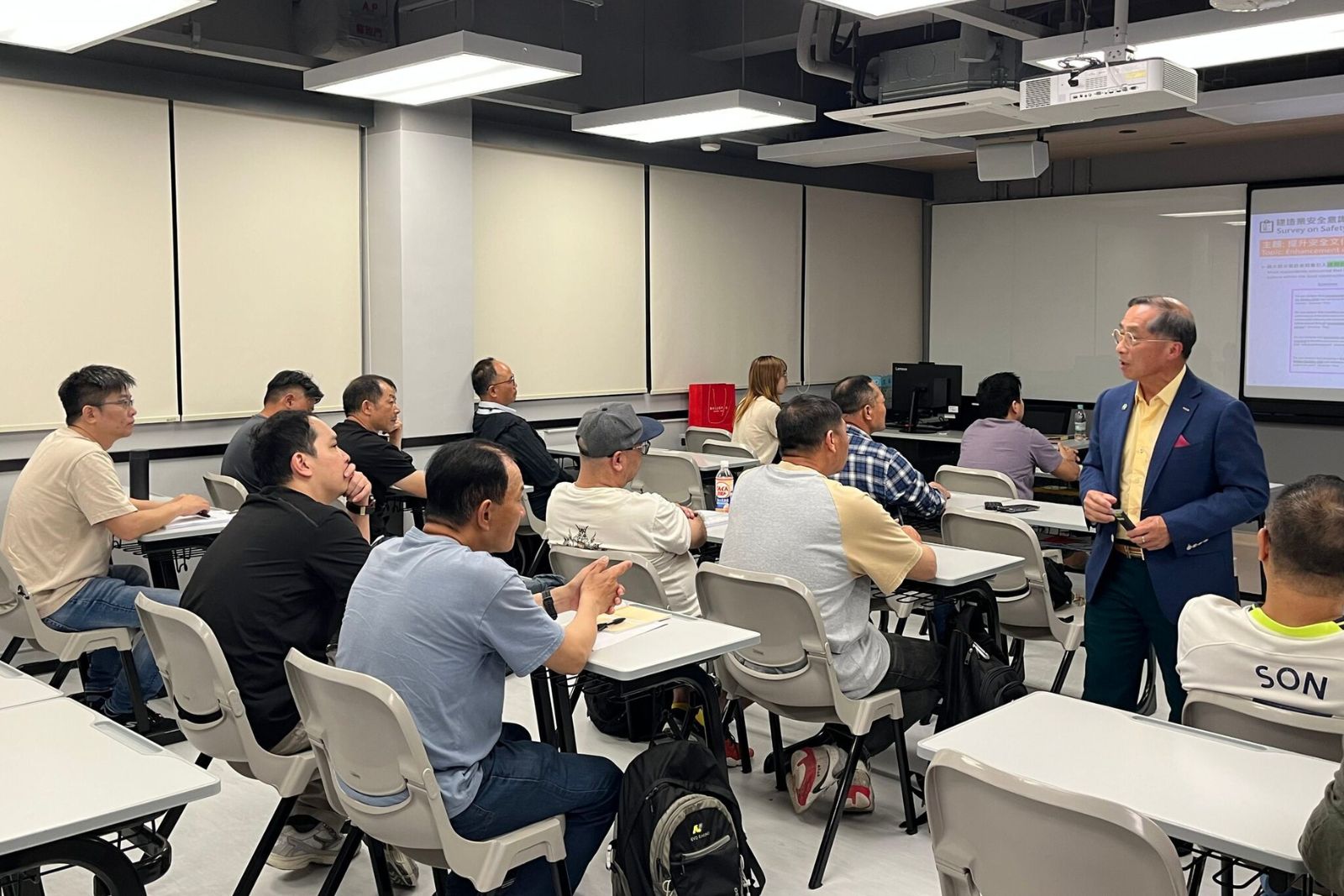
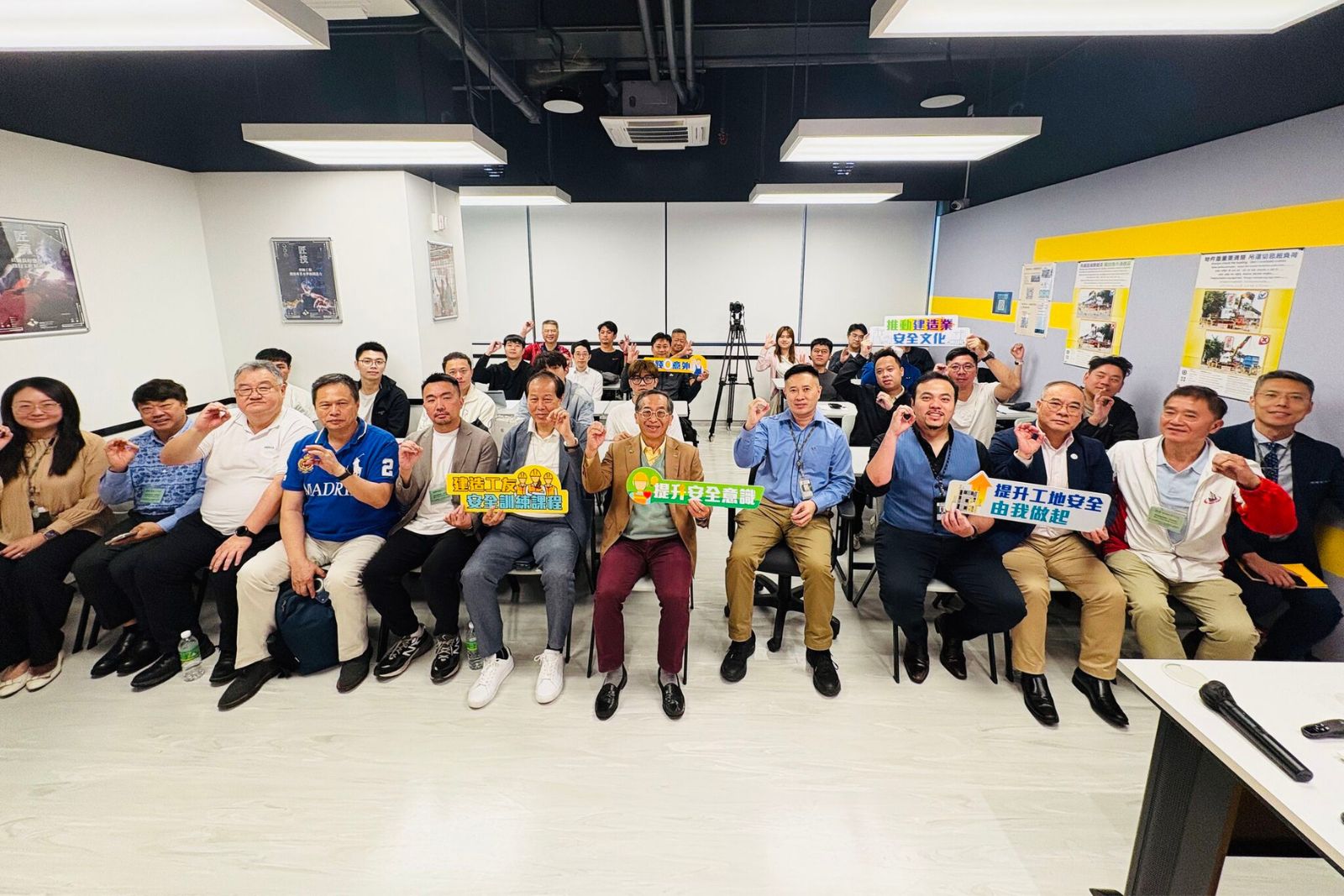
Technology can strengthen systems, but only capable frontline management personnel can translate these systems into daily safety practices. Last month, during the "Certificate in Construction Specialist Trades Management and Supervision" and the "Certificate in Safety Training for Frontline Construction Supervisors" programmes offered by the Hong Kong Institute of Construction (HKIC), I shared with students the importance of leadership, safety culture, and technological innovation. In my sharing, I emphasised that safety is a shared responsibility requiring robust supervision, dynamic risk assessment, and the facilitation of smart technology. We are not merely training technical personnel; we are shaping a new generation of leaders to shoulder the mission of safeguarding workers' safety.
I reiterated the core philosophy of "Life First" and the critical role of leadership in practicing a safety culture. Frontline management personnel are the "gatekeepers" who need to ensure a seamless transition between planning and on-site construction, allowing every worker to go home safely. Meanwhile, as the "Smart Site Safety System (4S)" is progressively implemented, technology is undoubtedly a crucial aid, but the insight and accountability of management personnel remain the key to making immediate and accurate decisions.
These training programmes have strengthened my belief that, regardless of technological advancements, talent is the foundation of a safety culture. Nurturing frontline leadership talent equipped with professional competence and safety awareness, allowing experience and technology to be passed down, is the inevitable path for the sustainable development of the construction industry.
Countdown to the WorldSkills Competition
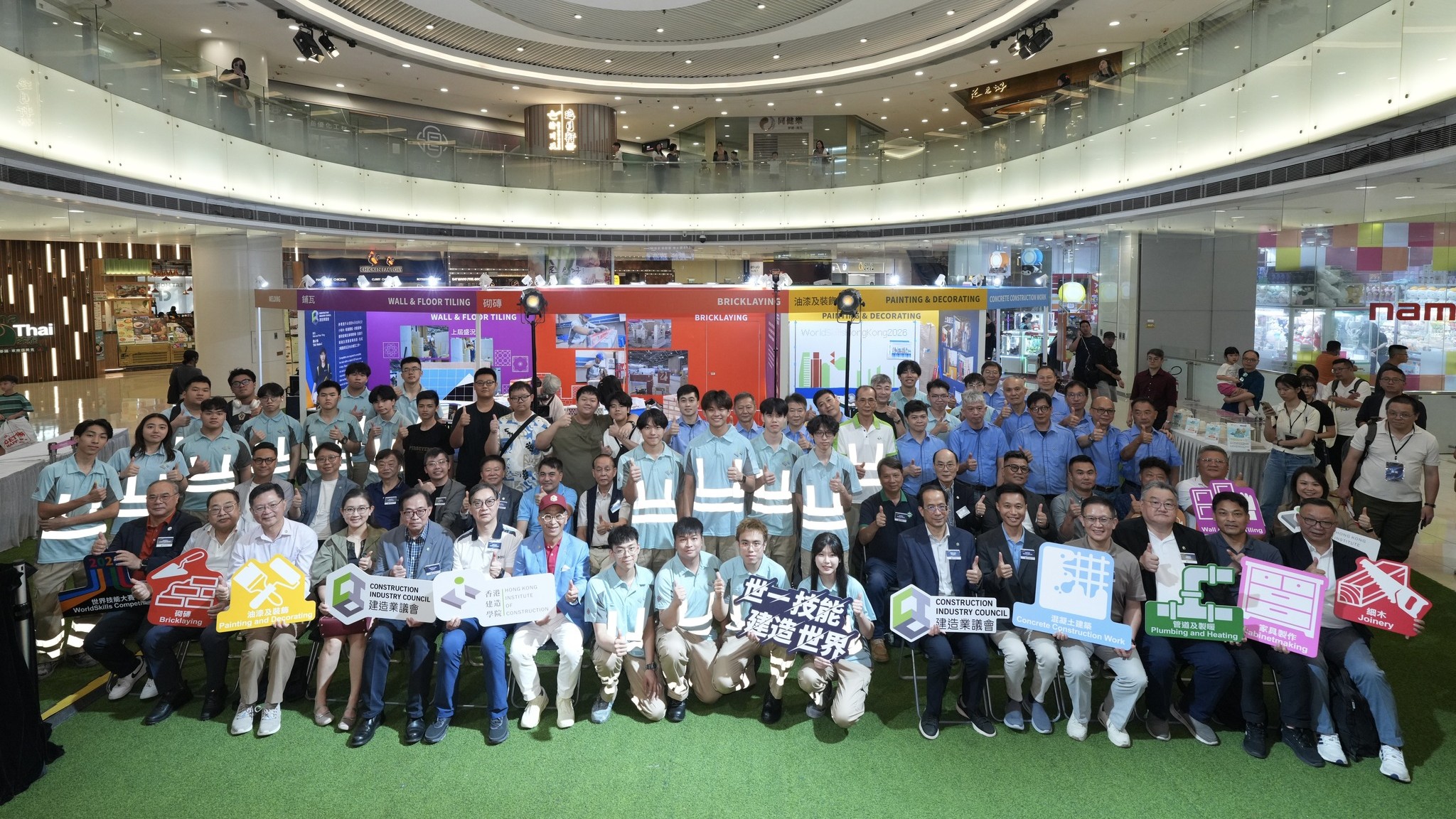
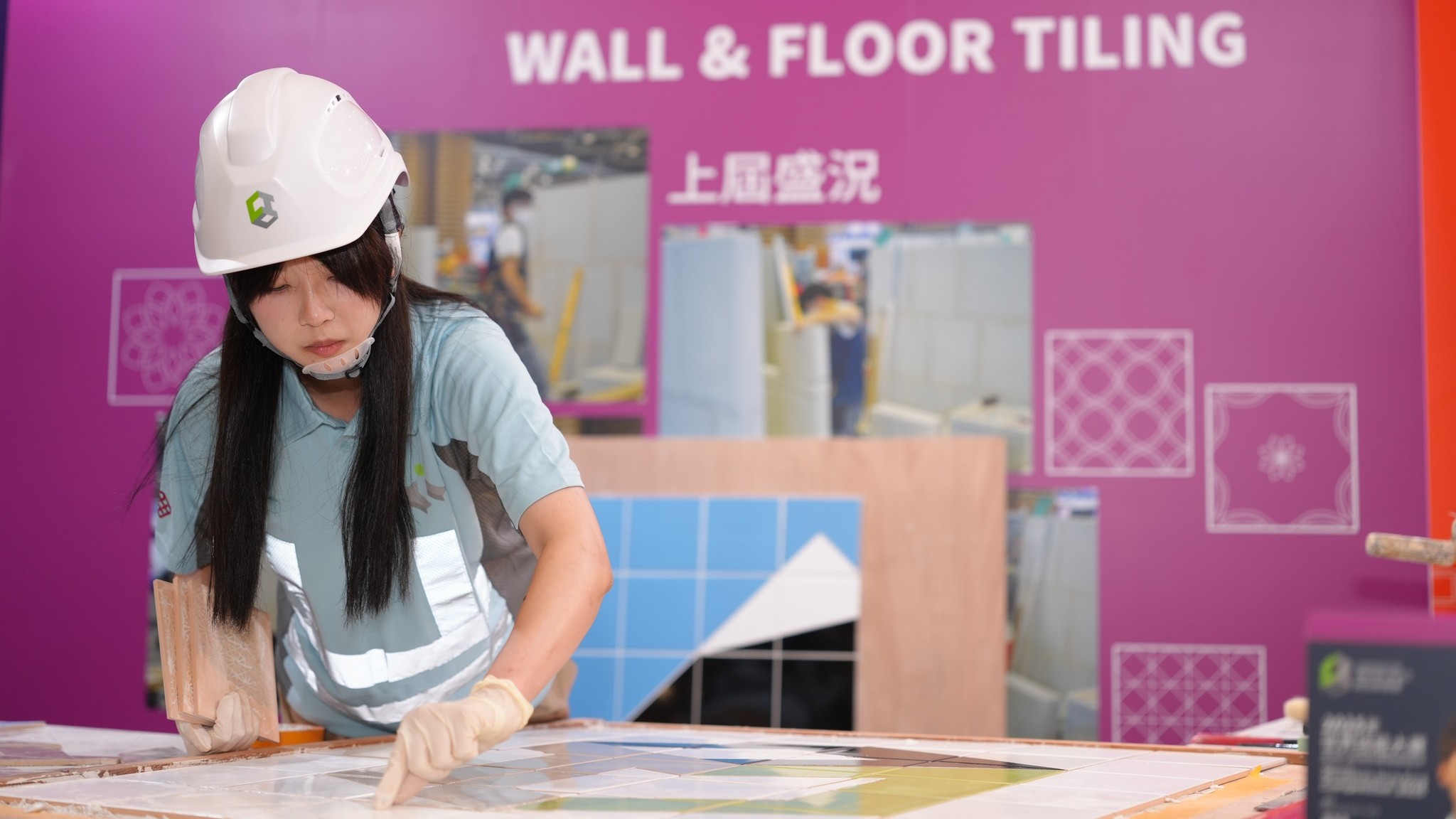
The 48th WorldSkills Competition will be grandly held in Shanghai this September. CIC will send nine competitors to represent Hong Kong in this international event, often hailed as the "Skills Olympics". They will participate in eight construction-related trades: Bricklaying, Cabinetmaking, Concrete Construction Work, Joinery, Painting and Decorating, Plumbing and Heating, Wall and Floor Tiling, and Welding.
To invite the public to share in this momentum, CIC and HKIC organised the "WorldSkills Competition 2026 Construction Skills Showcase". Through interactive exhibitions and hands-on experiences, everyone can witness firsthand the seamless integration of traditional techniques and modern innovation, as well as the developmental milestones of Hong Kong's construction industry. Together with several industry leaders, I also attended the cheer session to personally encourage our representatives. I expect them to go all out, achieve outstanding results once again on the international stage, and let the craftsmanship spirit of Hong Kong's construction industry shine brightly!
From the Wuhan study tour to the GASCCE event, and from frontline training to the WorldSkills Competition, I have profoundly realised that the future of the construction industry requires not only the empowerment of technology but also the inheritance of talent. Technology can indeed make monitoring more precise and management more efficient, but what truly drives the steady advancement of the industry is the safety culture, craftsmanship spirit, and leadership rooted in the heart of every practitioner. Let us work collaboratively—empowered by technology and anchored in craftsman-soul—to safeguard every worker and build a brighter future for Hong Kong.