We provide Construction Workers Registration service, and introduce Registered Specialist Trade Contractors Scheme as well as the Technically Competent Persons Registration Scheme to the construction industry.
We provide Construction Workers Registration service, and introduce Registered Specialist Trade Contractors Scheme as well as the Technically Competent Persons Registration Scheme to the construction industry.
The National 15th Five-Year Plan explicitly proposes the comprehensive implementation of the "Artificial Intelligence (AI)+" initiative, driving the integration of AI into traditional industries and social governance, and presenting unprecedented opportunities to the Hong Kong construction industry. As an industry pioneer, the Construction Industry Council (CIC) firmly recognises that AI will drive significant transformations to the future development of the industry. Early this year, we designated 2026 as the "Year of AI". This is a call to action, leading the industry to proactively align with national strategies through concrete actions.
Driving Cross-Sector Collaboration: AI Salon Events Deliver Real Results
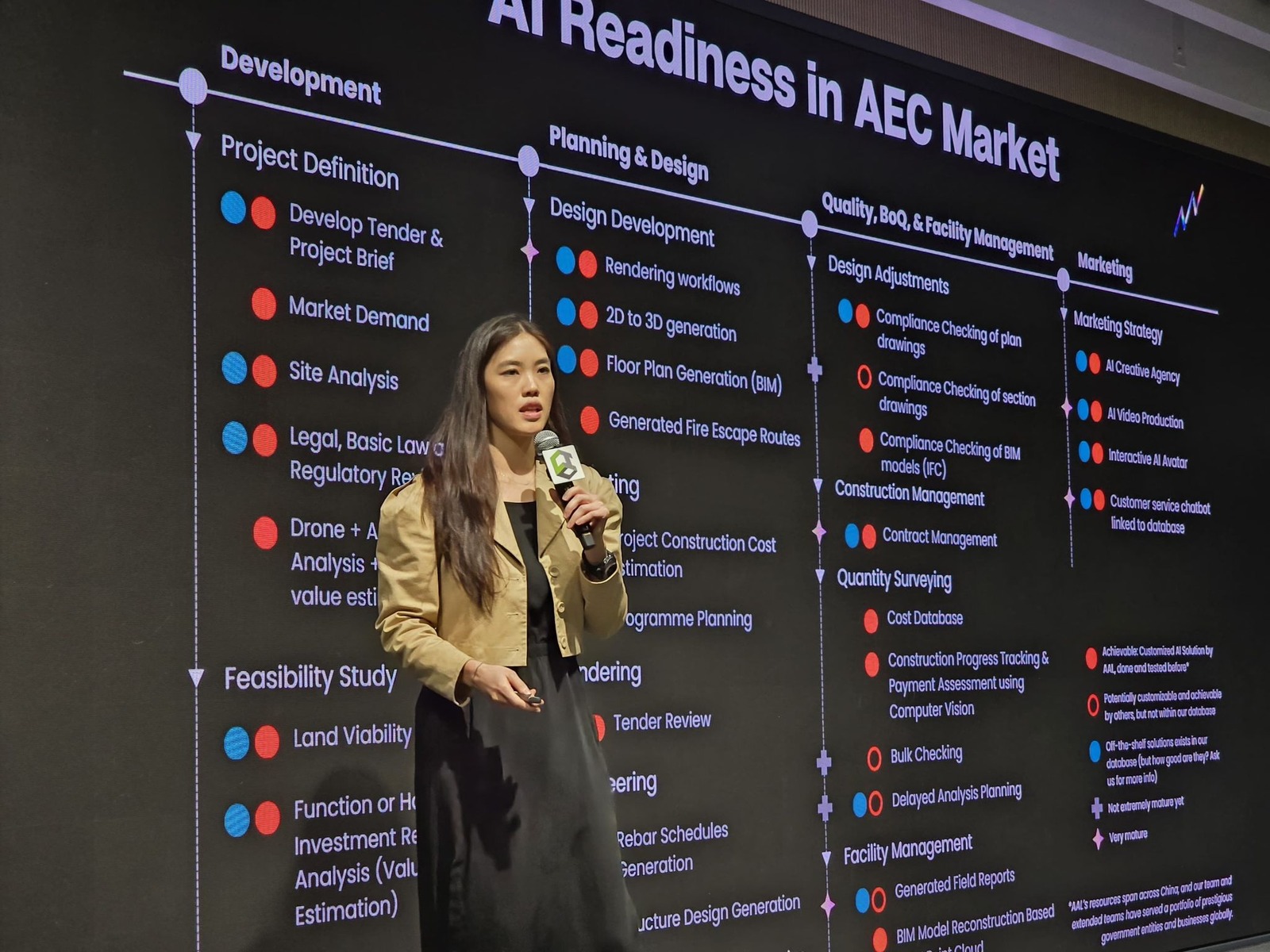
To propel AI from concept to practice, the CIC has actively organised various exchange activities, having hosted nearly 10 "AI Salon" events since the initiative's launch. The most recent event, themed "AI + Design Optimisation", delved into the application of AI in architecture, civil and structural engineering, digitalised workflows, and integrated system design.
The AI Salon events aim to build a cross-sector platform, bringing together the government, industry, academia, and investors to promote the implementation of scientific research results and accelerate the translation of AI research into practical applications. I am pleased to see the active participation of leading industry enterprises: the MTR Corporation is exploring potential collaboration with suppliers to introduce a WhatsApp AI assistant; Sun Hung Kai Properties also showed great interest in AI-assisted architectural and planning design tools, proving the application potential of AI technology in the Hong Kong construction industry.
I encourage industry practitioners to participate actively in the AI Salon events to jointly seize the transformation opportunities brought by AI. I believe participants will benefit greatly.
AI Seminar & Exhibition: Powering Smart Innovation in Construction
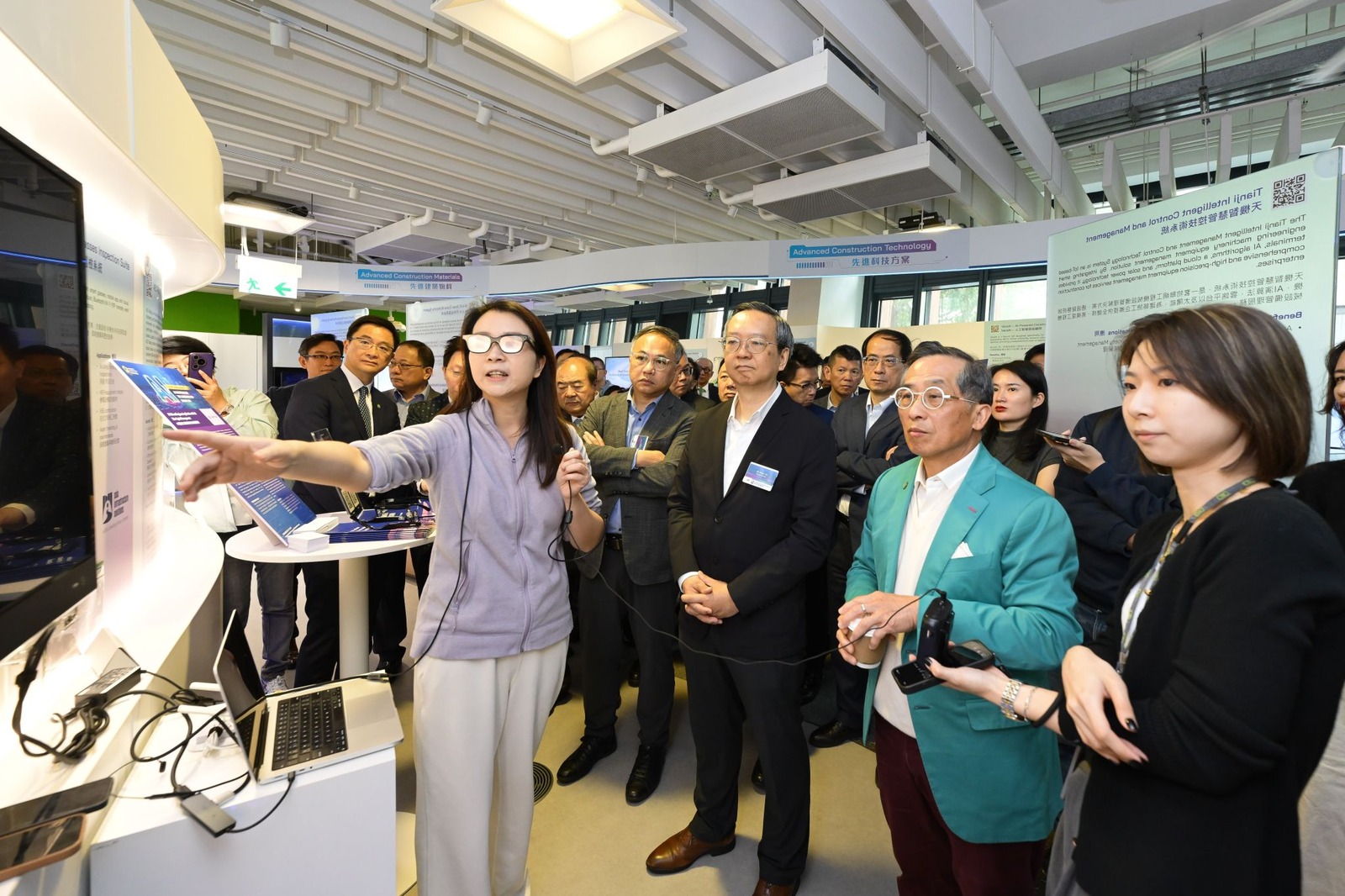
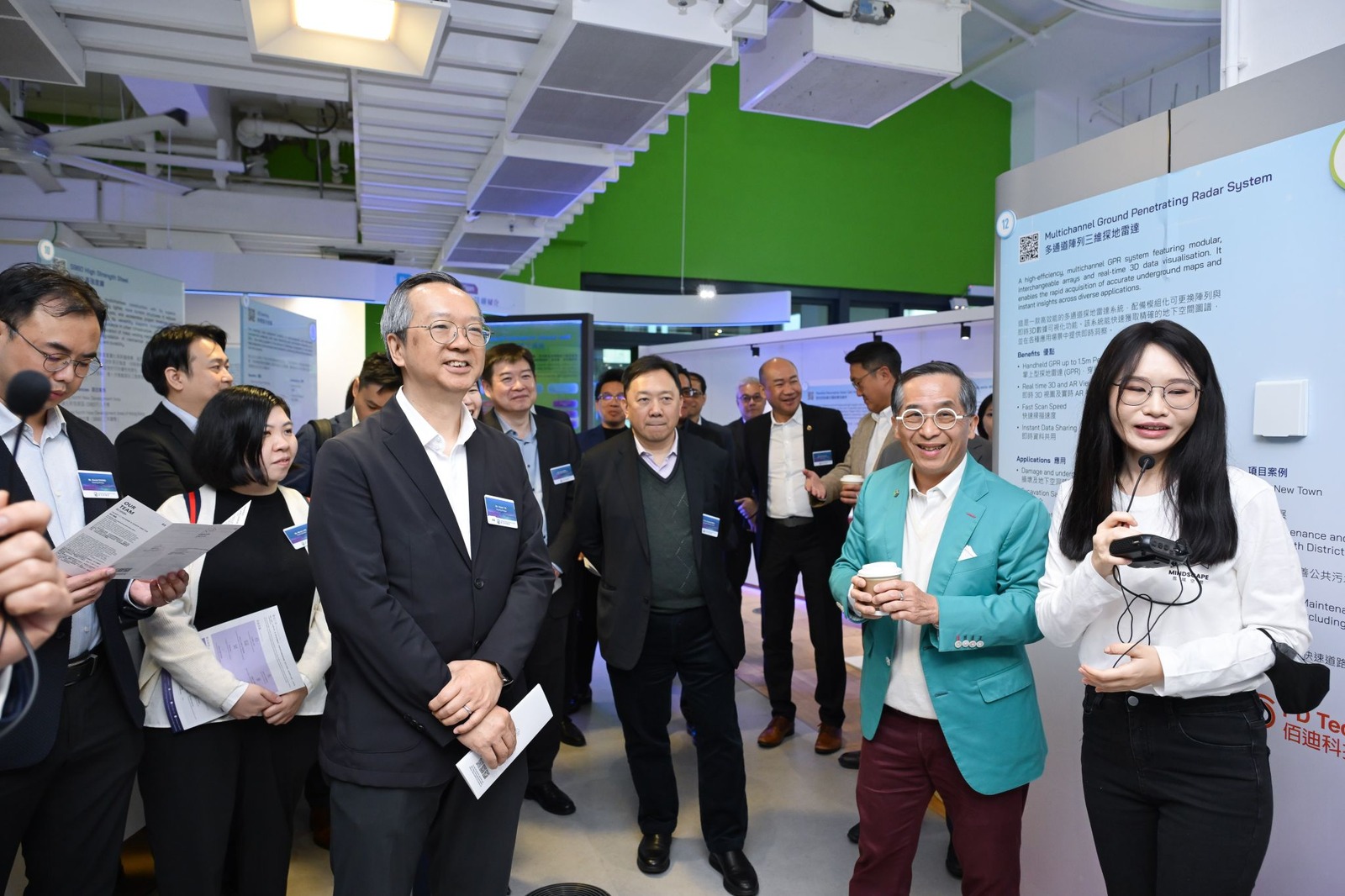
The CIC hosted the "AI To Streamline The Construction Workflow" seminar and themed exhibition last month to encourage the industry to leverage AI to drive the transformation and upgrading of traditional industries. The event brought together 21 technology companies to showcase the latest solutions in AI, Generative AI, video/image analytics, and AIoT, sharing how technology can enhance project efficiency and strengthen site safety. Special AI guided tours were arranged on-site, allowing participants to observe live demonstrations and exchange views with suppliers on the practical applications of AI in inspection, safety monitoring, automation, and project management. The event attracted numerous industry professionals to attend in person, with 3,000 participants joining concurrently online, reflecting the industry's strong emphasis on AI applications.
I mentioned at the event that the rapid evolution of AI is bringing the impact of a paradigm shift to various industries. Rather than fearing these changes, we must proactively learn to harness them. To further promote the implementation of AI, the CIC is collaborating with the industry to develop 50 AI application use cases covering eight major areas. These will be rolled out in phases in due course, allowing enterprises of all sizes to find their suitable AI application directions.
Wuhan Delegation: Benchmarking National Smart Construction Practices
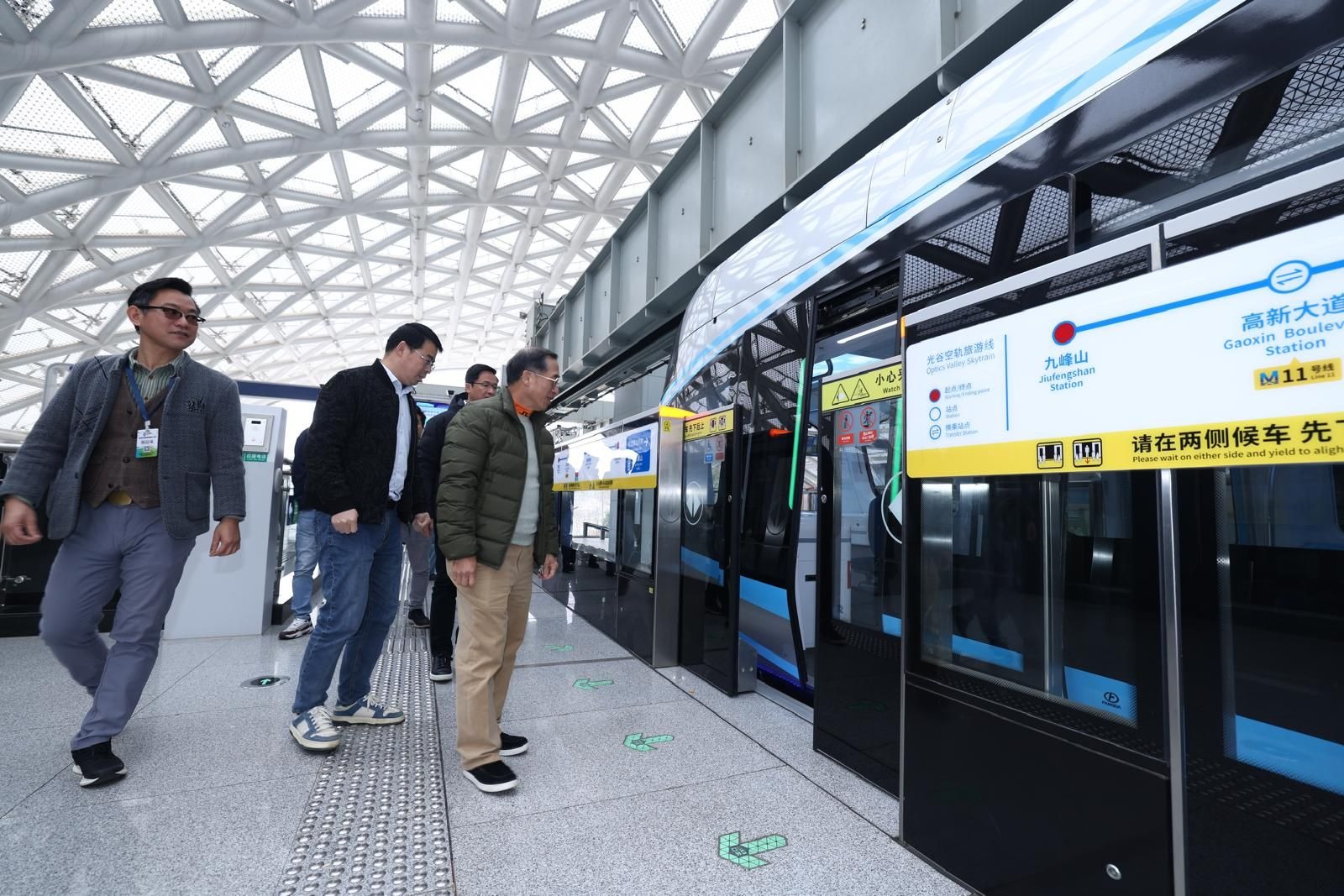
Last month, I led a delegation to visit Wuhan — a national pilot city for smart construction. Its model of deep integration of "Industry, Academia, and Research" is exactly a paradigm of the innovation system advocated by the 15th Five-Year Plan. The two-day itinerary was packed, and every stop was highly illuminating.
From an industry perspective, China Railway Major Bridge Engineering Group has designed and built over 4,000 bridges globally, possessing solid integrated capabilities in scientific research, design, and construction. The "drawing-less construction" system of the Central South Architectural Design Institute directly drives production and construction from Building Information Modelling (BIM). With integrated information flow, it significantly reduces reliance on paper drawings, prompting me to reflect on when Hong Kong can take a major stride towards 'paperless' construction sites.
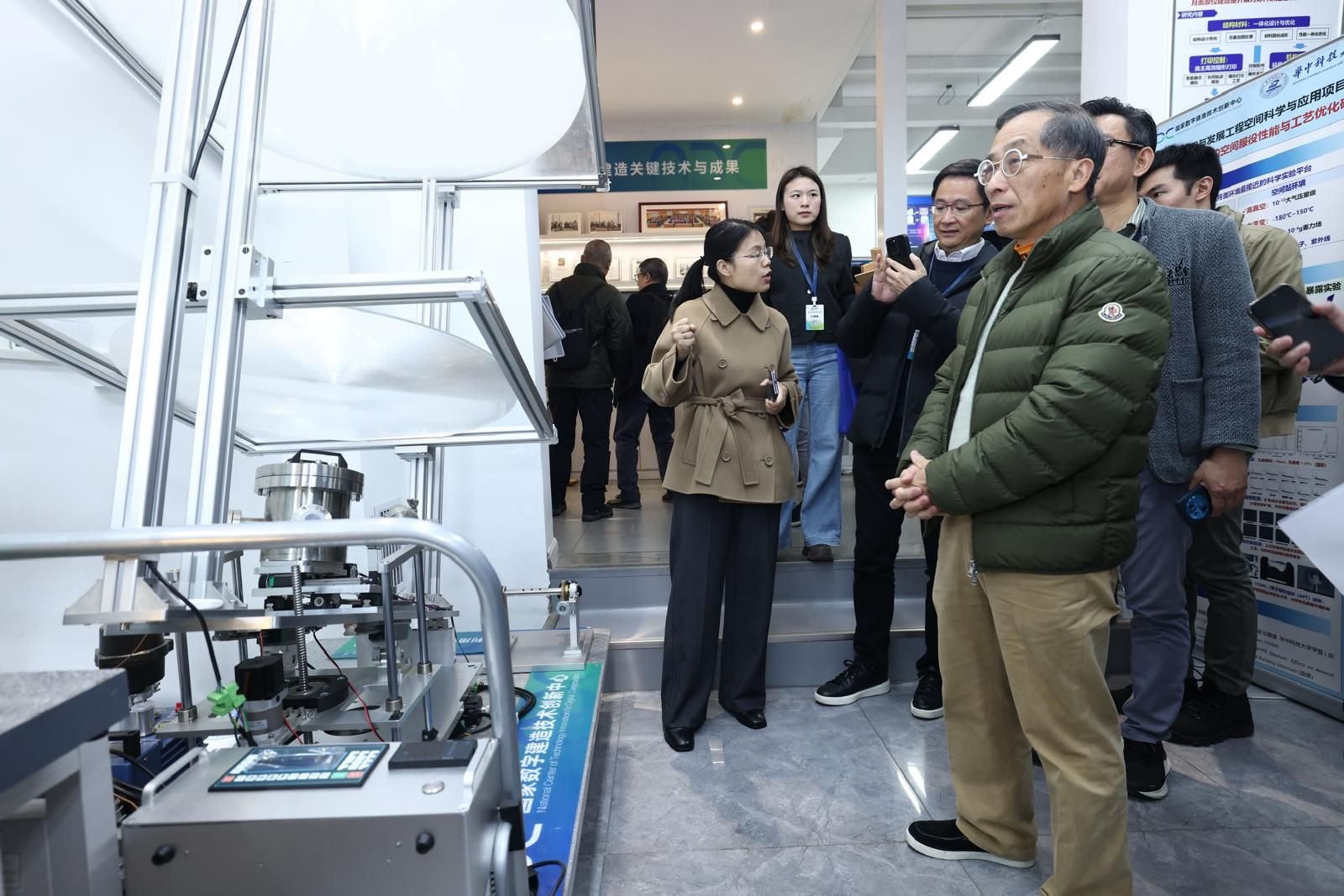
Turning to academia, the satellite image recognition and geospatial intelligence technologies of the State Key Laboratory of Information Engineering in Surveying, Mapping and Remote Sensing at Wuhan University are highly valuable for urban condition assessment. The National Centre of Technology Innovation for Digital Construction at Huazhong University of Science and Technology features "integrated collaborative innovation of education, technology, and talent", focusing on resolving technical bottlenecks such as digital design and smart perception, providing core technical support for the Mainland's construction industry.
In the realm of research, the CSCEC Smart Construction Industrial Park has attracted over 40 enterprises, with an annual revenue exceeding RMB 11 billion, demonstrating a clear industrial cluster effect. The park not only provides hardware facilities but, more importantly, builds a platform for technical exchange and industrial collaboration, inspiring me to consider how the CIC can further leverage its role as an industry platform to promote local innovation collaboration. During the visit, I also exchanged views with the Wuhan Construction Industry Association, deeply realising the crucial role of industry associations in promoting standard formulation, technology application, and talent training.
Final Call for Two Major Awards: Celebrating Industry Innovation
The 15th Five-Year Plan emphasises promoting green and low-carbon development and empowering the transformation of traditional industries with AI. The CIC is organising the "CIC Sustainable Construction Award" and the "CIC AI Award" this year, precisely providing a platform for the industry to exchange and learn from each other from these two dimensions.
Established in 2018, the "CIC Sustainable Construction Award" aims to recognise organisations and practitioners who have implemented good practices in sustainable development within the industry. The deadline for this year is 18 June 2026. The judging criteria cover digital technologies (such as AI, carbon accounting, and energy efficiency), supply chain management, and innovative solutions. Many innovative construction technologies adopted by past winners are now widely applied in the industry, which is exactly the original intention of establishing the award.
The inaugural "CIC AI Award" commends AI solutions from industry stakeholders, technology suppliers, and academic institutions. It is divided into two major categories with a total of 12 sub-categories, covering the entire chain from R&D to application, aiming to foster cross-sector collaboration and scientific research development. The deadline is 30 April 2026. I particularly encourage technology suppliers and engineering companies to team up and participate, showcasing the achievements of cross-sector collaboration.
With applications now open for both prestigious awards, I strongly encourage industry elites to participate and share experiences through the competitions, and work together to propel the construction industry towards a greener and smarter future.
CIC AI Assistant Wins Global Acclaim: Showcasing Hong Kong's Innovation in Construction Safety
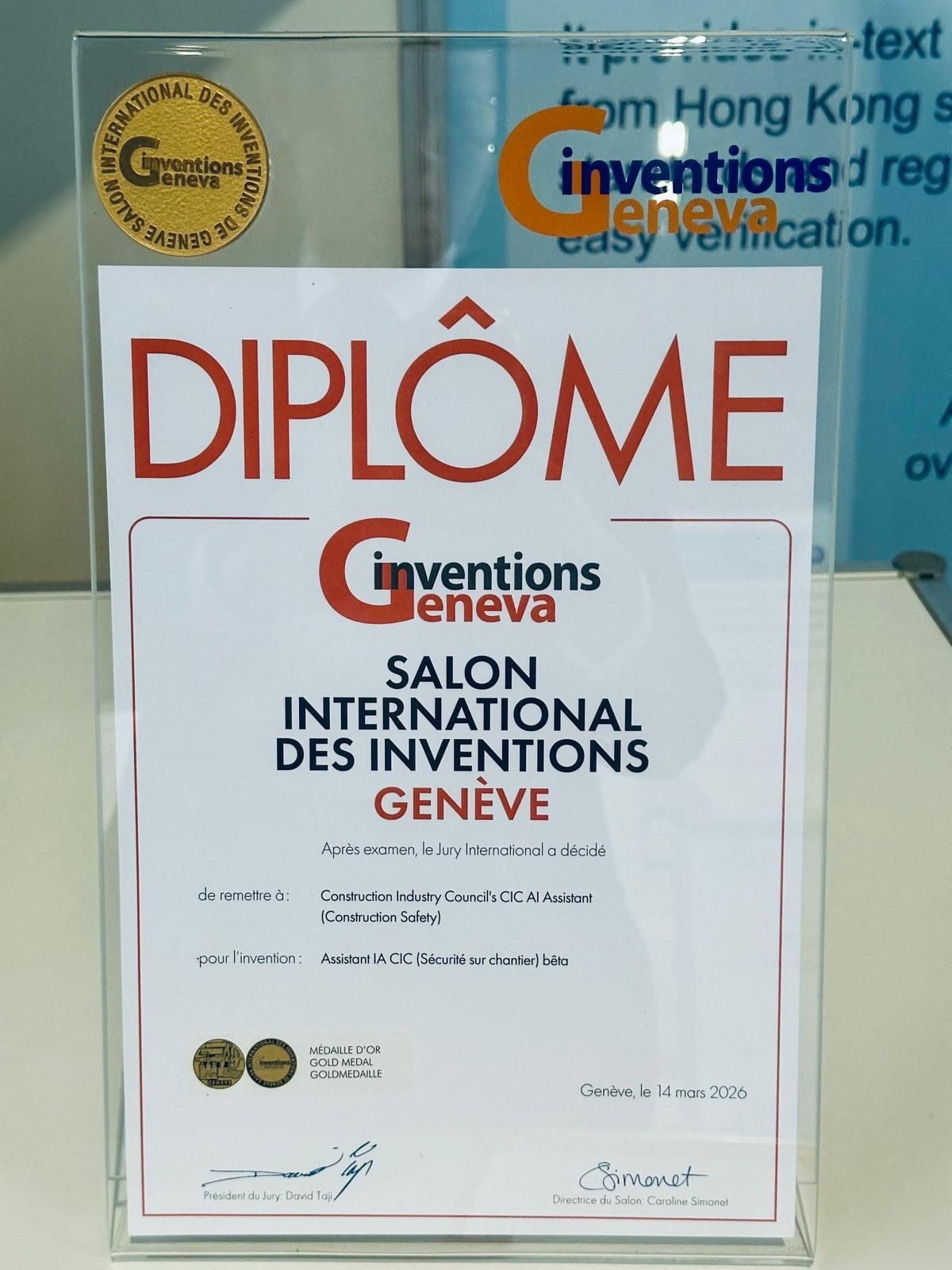
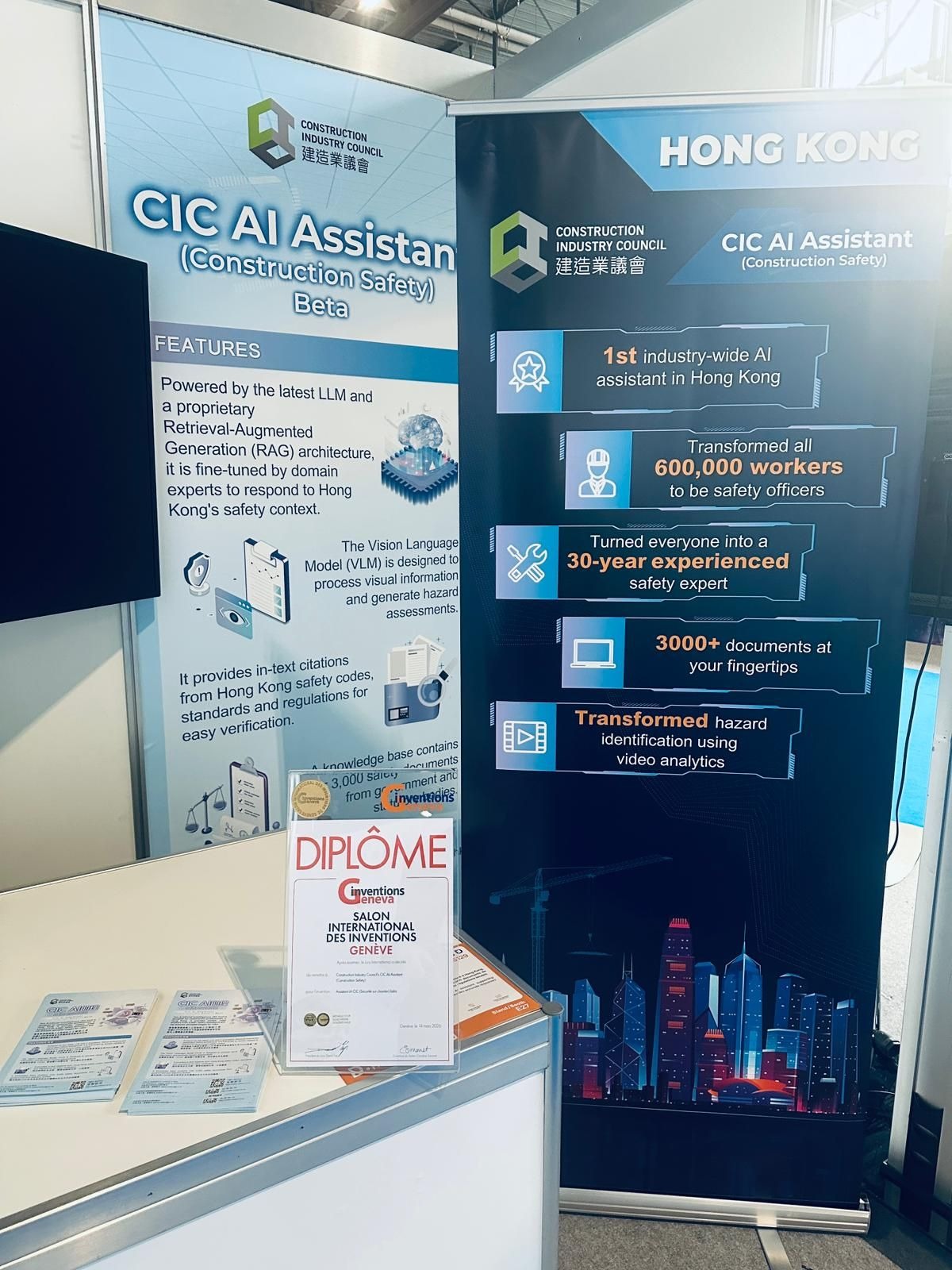
We recently received excellent news from the 51st International Exhibition of Inventions Geneva. In its first participation, the CIC won a Gold Medal with the "CIC AI Assistant (Construction Safety) Beta Version", showcasing to the world the innovative achievements of the Hong Kong construction industry in the field of AI safety.
This exhibition gathered over 1,000 innovative inventions globally. The CIC AI Assistant can support the existing approximately 600,000 construction industry practitioners. Trained on over 3,000 construction safety-related documents, it provides safety support for frontline workers and management personnel through AI smart hazard identification functions using video and image analysis. Currently, over 250 organisations have adopted it in their daily operations.
Other participating units from Hong Kong at the same event, including government departments, public organisations, tertiary institutions, and local schools, also showcased various innovative technology solutions. The Development Bureau and its departments also won 36 awards, including many AI, robotics, and drone projects. It is particularly encouraging that creative STEAM projects covering IoT, sustainable development, and health technology by Hong Kong students successfully attracted global attention, demonstrating that Hong Kong possesses an endless talent pool. This international award reflects Hong Kong's dual advantages in technological strength and talent reserves. The CIC will continue to optimise the system, aiming to apply AI as much as possible at the project and organisational levels.
The 'Year of AI' does not mean allowing machines to replace our workforce; rather, it is about empowering our people — enabling workers, engineers, and management personnel to work more safely and efficiently. The 15th Five-Year Plan points out the development direction for the industry, and AI technology provides practical tools for industry transformation. The key lies in our ability to seize these opportunities, take decisive action, and work collaboratively to forge a smarter future for the construction industry.